Field report · Raja Ampat, West Papua
Ten days aboard the Emperor Harmoni
A forty-two metre phinisi, a crew of twenty-one, and ten days in which the boat is the only address you have.
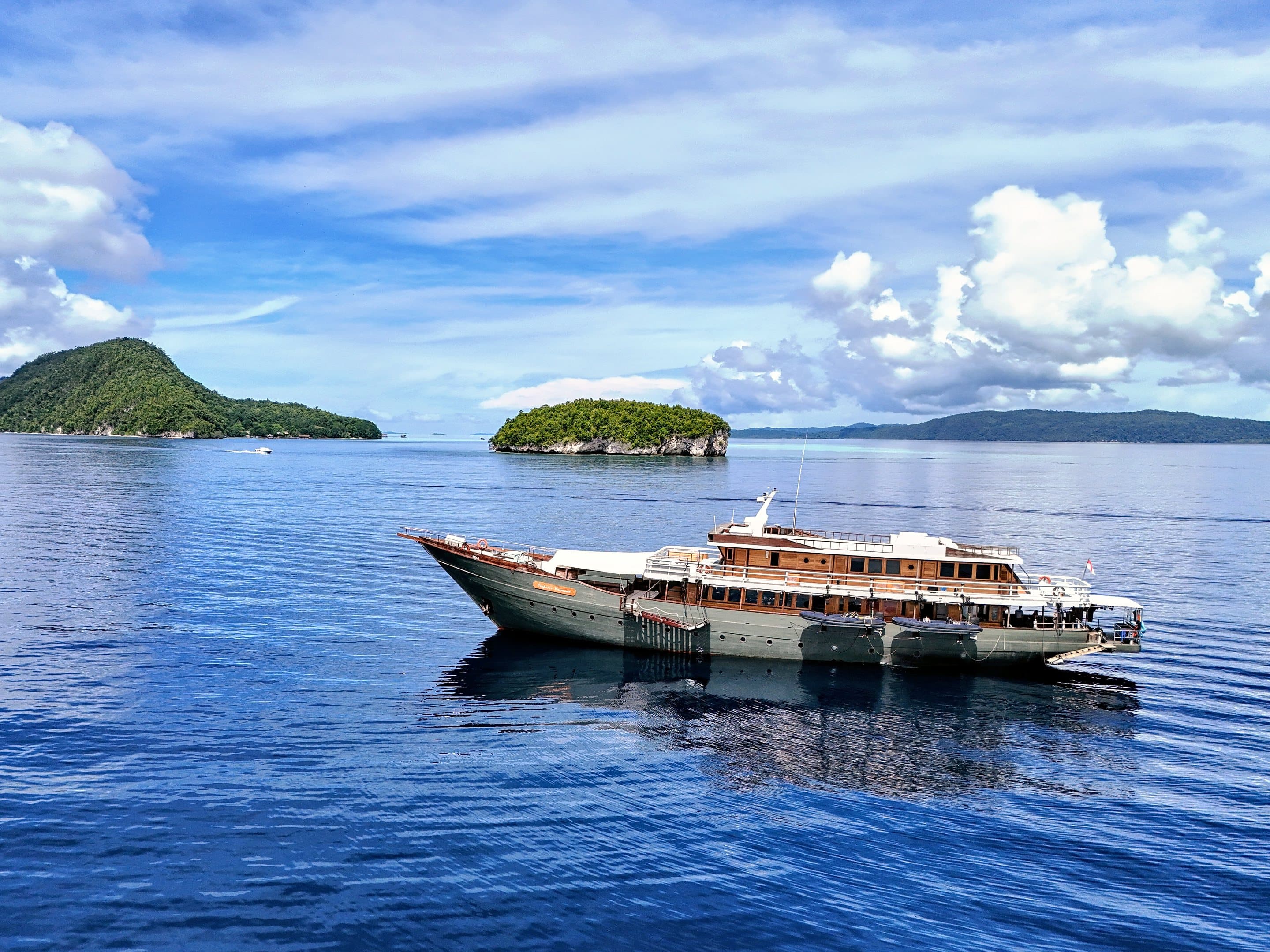
The Emperor Harmoni at anchor, Raja Ampat
For ten days the Emperor Harmoni was the only address we had. She is a phinisi, forty-two metres of traditionally built Indonesian timber with a crew of twenty-one, and once you are aboard her the question of where you are staying stops being a question at all. The boat moves at night. You wake up somewhere else.
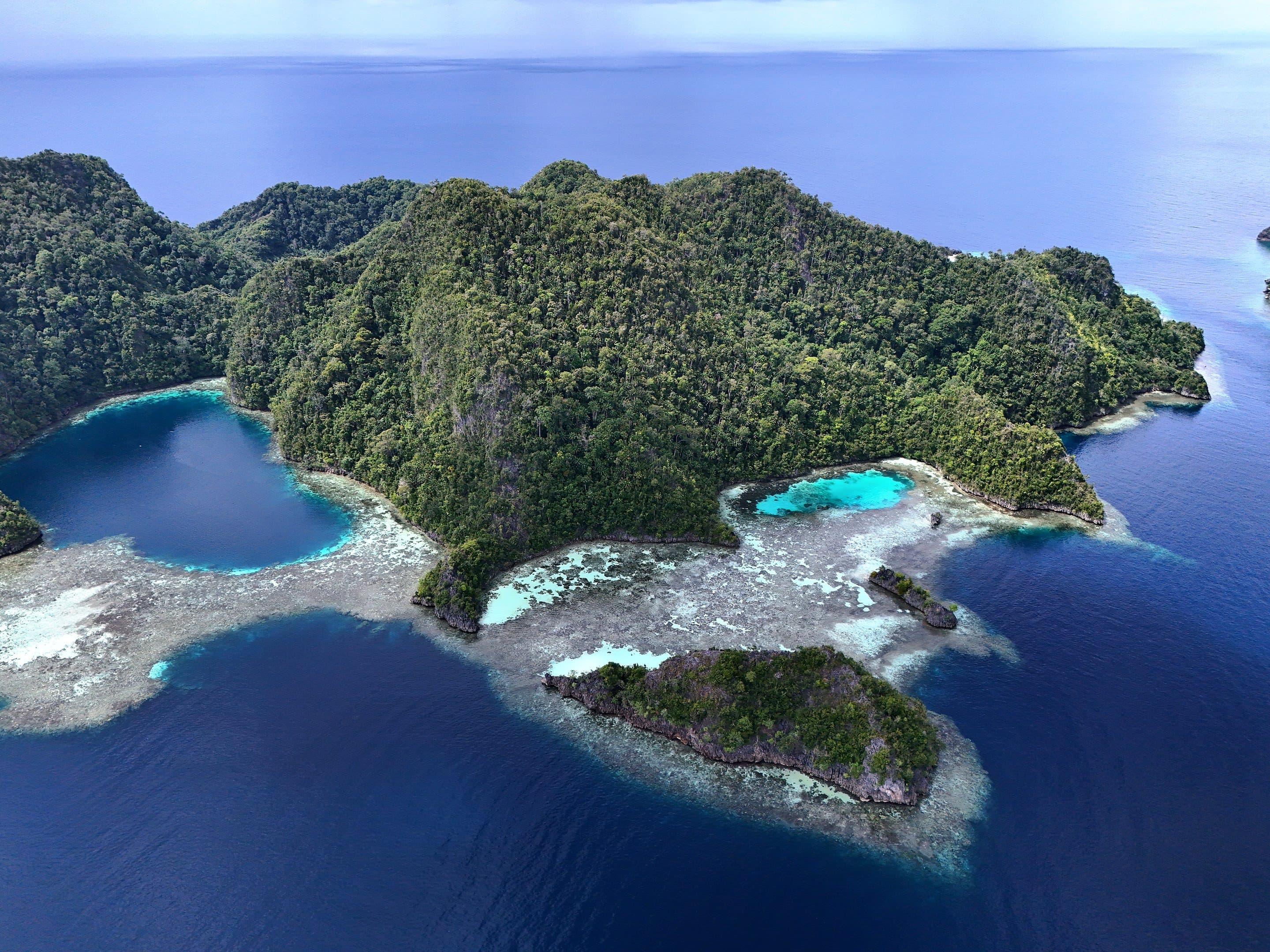
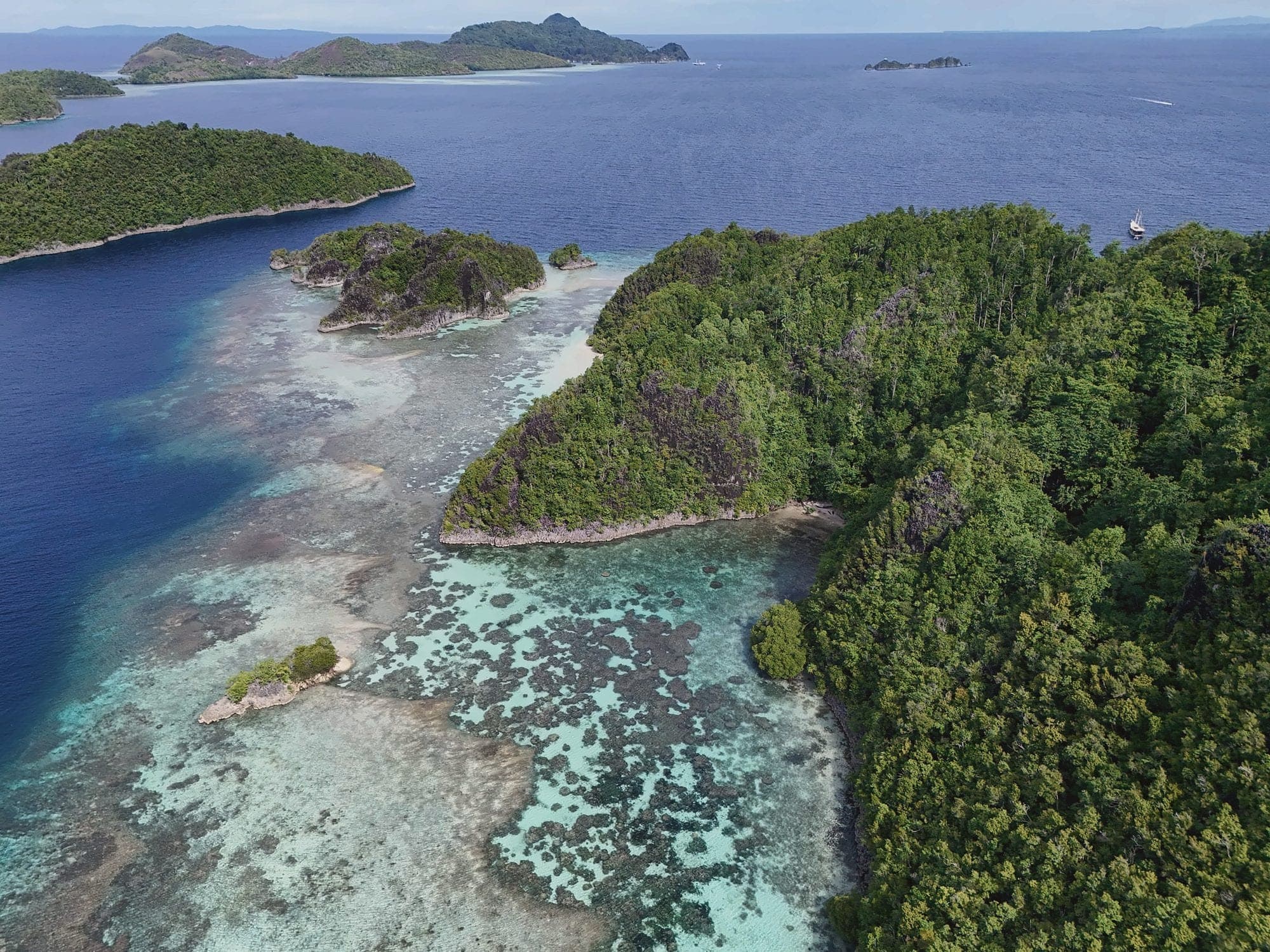
Raja Ampat is not one place. It is an archipelago off the western tip of Papua: limestone karsts, jungle islets, and water clear enough that from the top deck you can watch a turtle move across a reef forty feet down. The sites people fly this far for sit hours apart from each other. Stay on land and you spend a good part of every day in transit. Stay on a boat and the transit happens while you sleep, which is the entire argument for doing it this way.
We should be straight about our own part in it. We were not the divers on this trip. Each morning the divers went over the side into the Coral Triangle and we stayed above with the drone, which turned out to be its own kind of privilege. We will come back to that, because it changed how we think about who this trip is for.
“The boat moves at night. You wake up somewhere else, and that is the whole reason to do it this way.”
From the journalThe argument
Why a boat, and not a resort
There are good places to stay on land in Raja Ampat, and for some travellers they are the right answer. But the geography argues against them. The archipelago is spread across a great deal of sea, and the reefs, karsts and lagoons that make it worth the journey are not clustered around any one jetty. A land base means choosing a corner and accepting the boat rides out of it.
A liveaboard turns that around. You go to bed in one bay and wake up in another, and the day starts where the good water is rather than a long ride away from it. Over ten days that adds up to a different trip: more sites, less sitting in a speedboat, and evenings spent at anchor somewhere quiet rather than on the run back to a hotel before dark.
It also changes what the word hotel means. On the Harmoni there is no lobby to cross and no transfer to arrange. The cabin, the dining table, the dive deck and the top deck are all within a few steps of each other, and the crew is never far away. After the first day and a half we stopped thinking about logistics entirely, which is rare for us on any trip and almost unheard of at this distance from home.
Above the surface
What we saw from the air
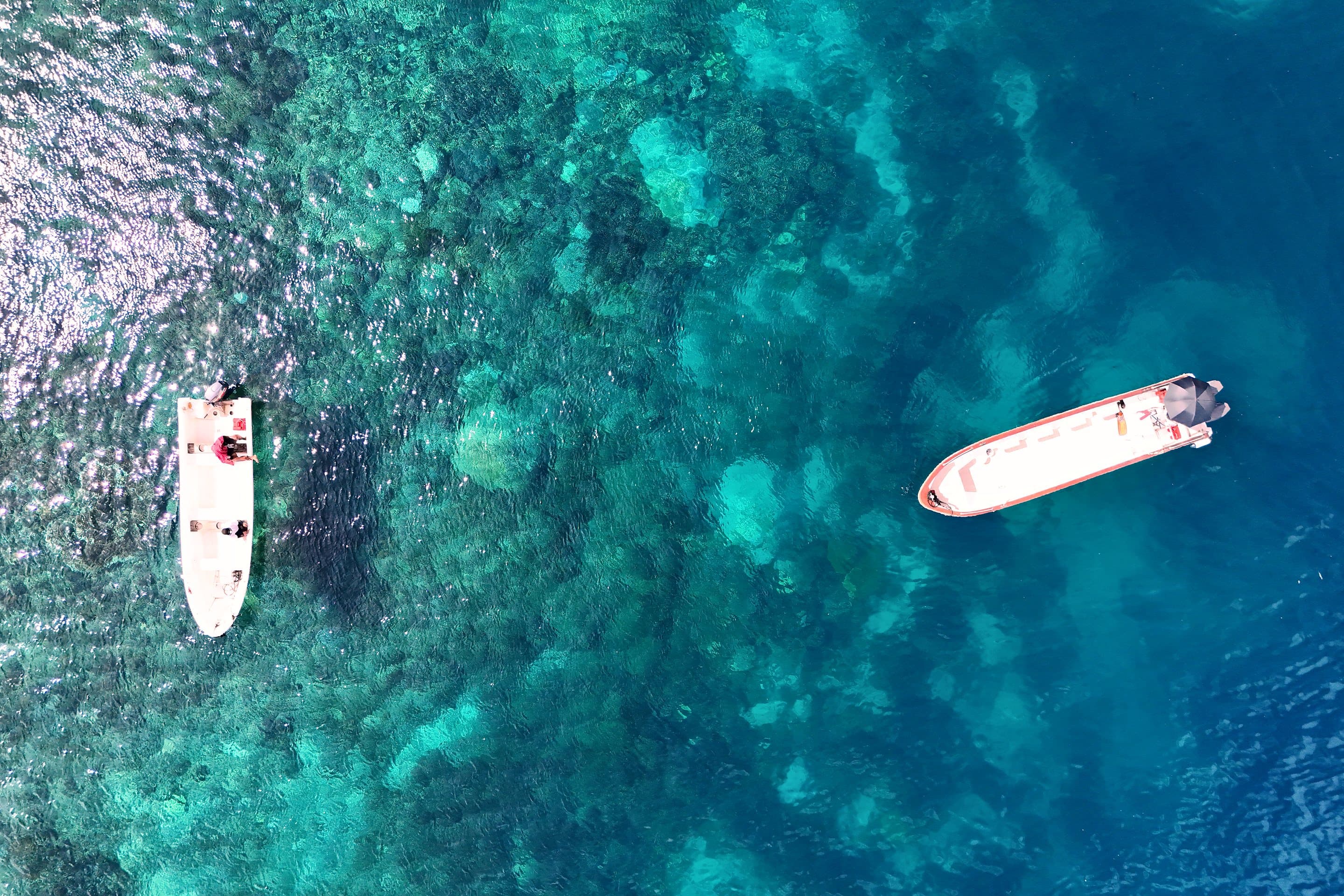
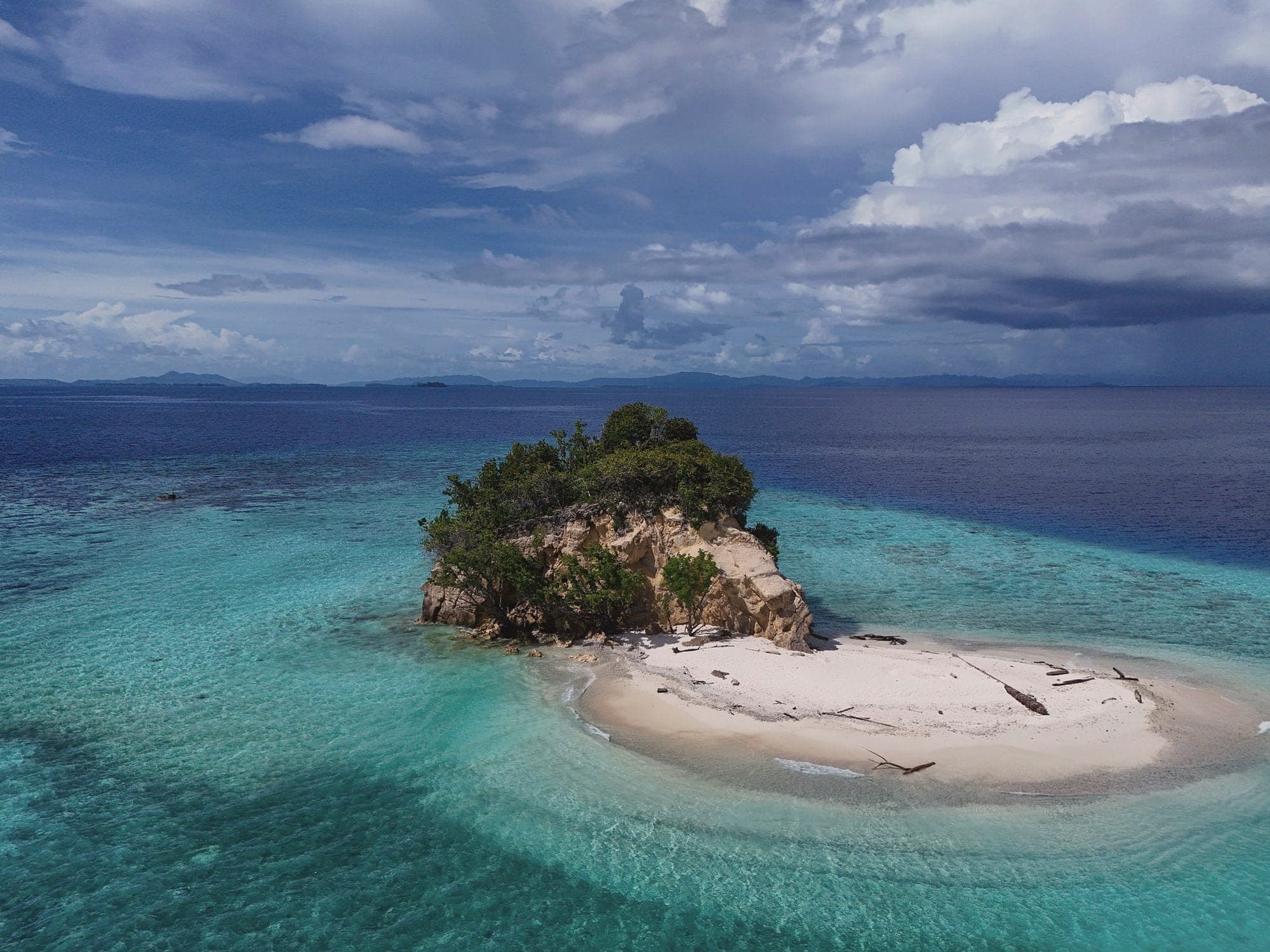
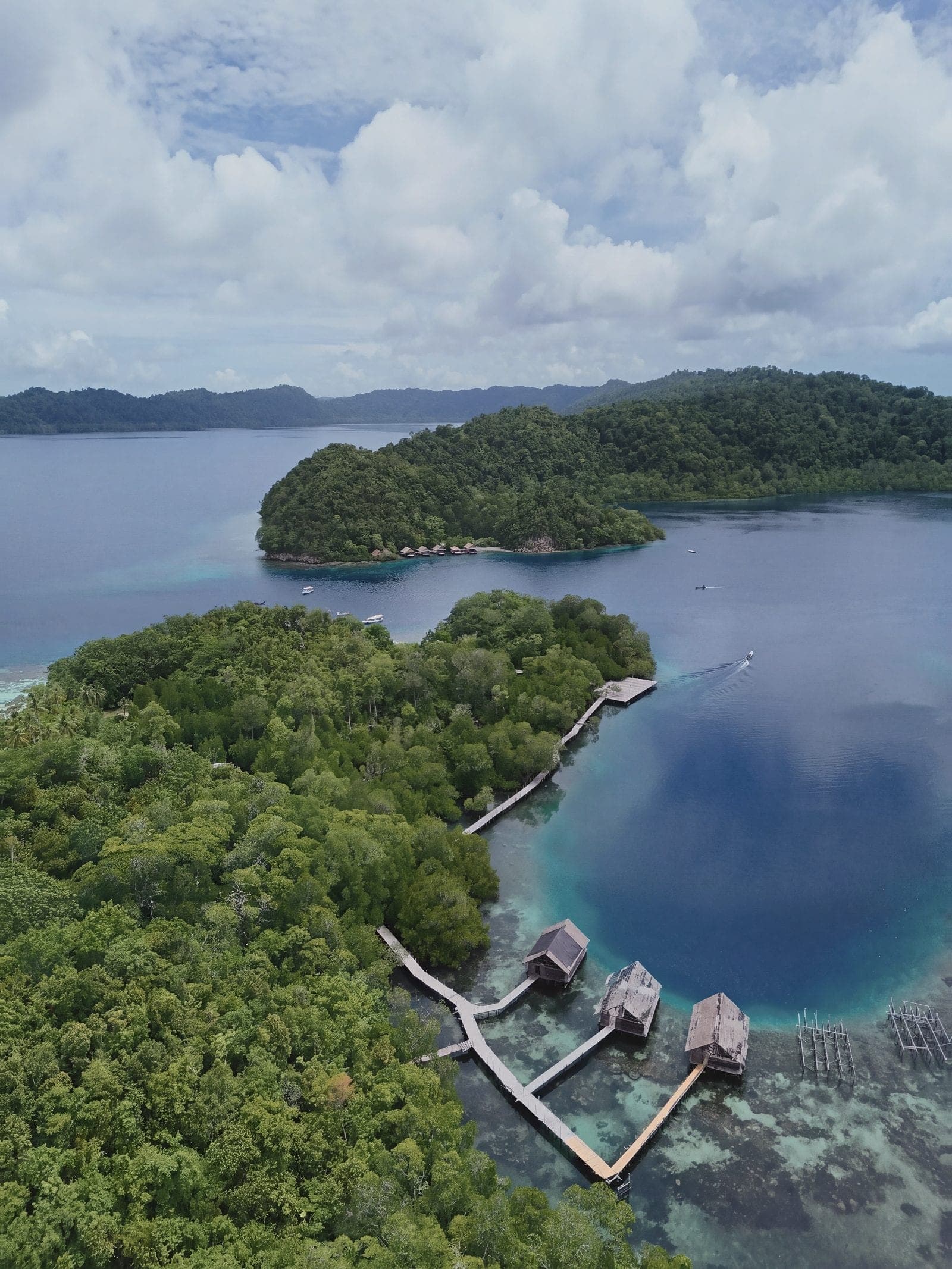
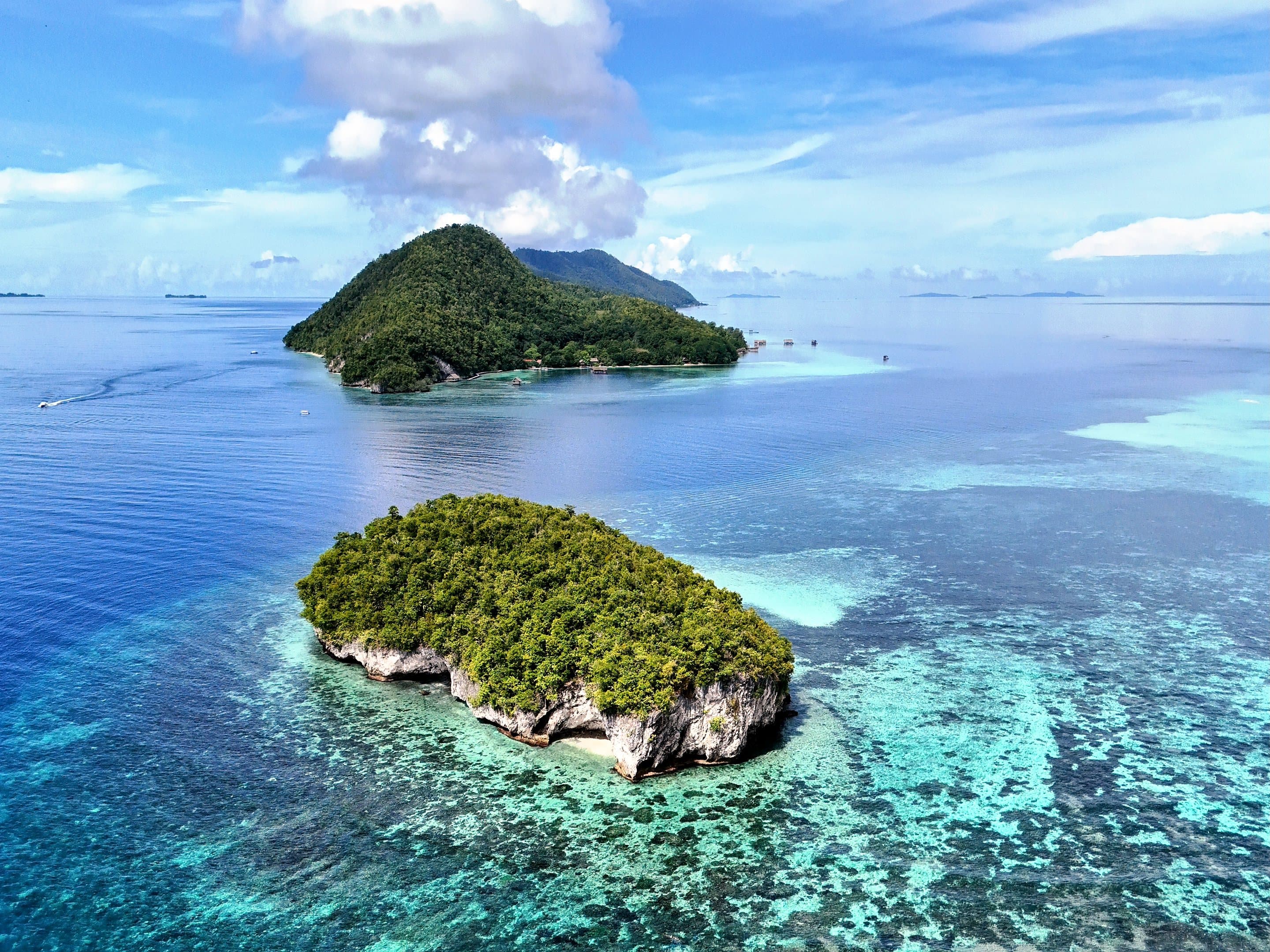
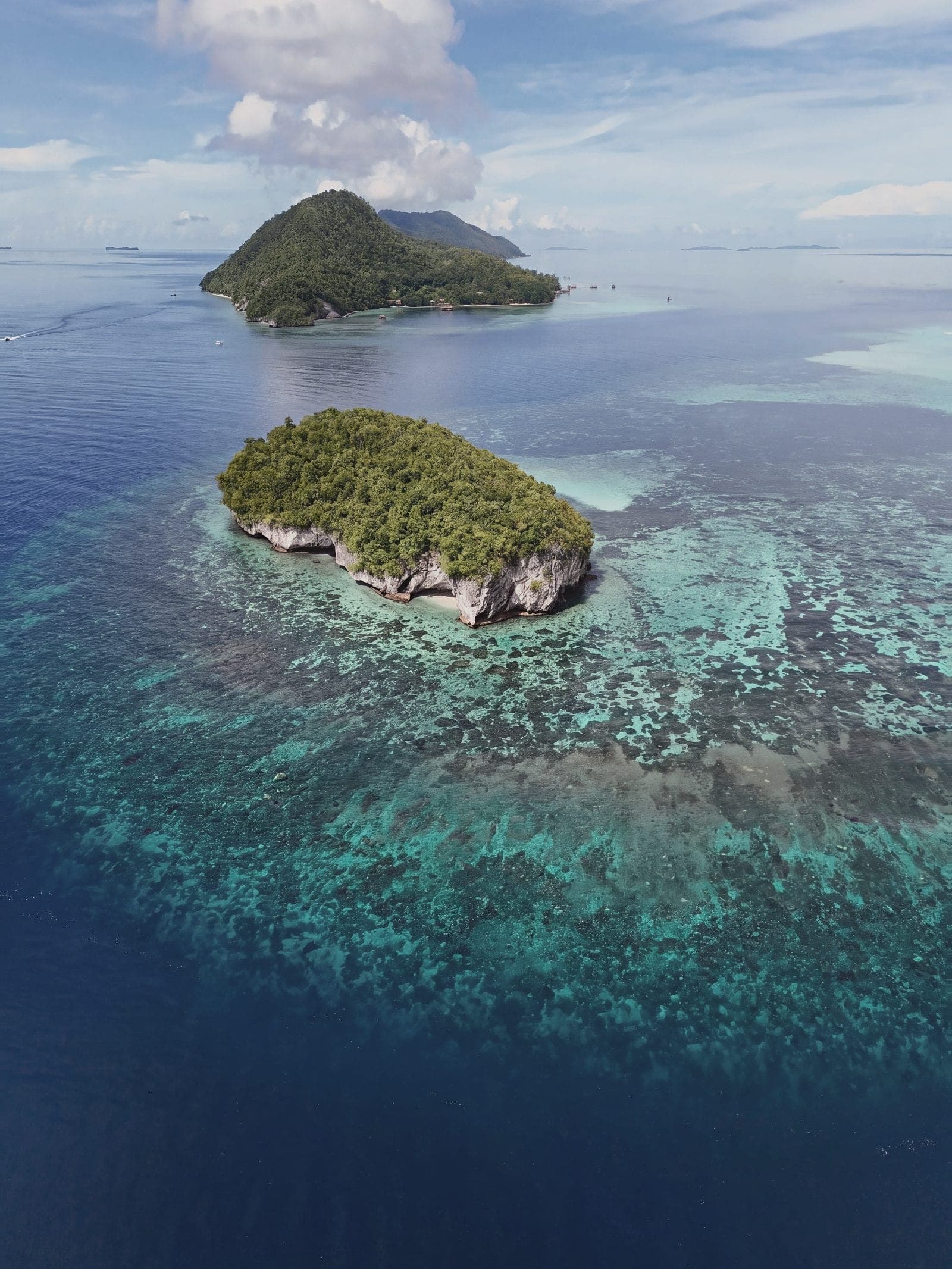
Most writing about Raja Ampat is written from underwater. Ours, for the most part, is written from the air. From the air you can follow the dinghies threading between coral atolls on their way to the morning's site. You can watch dolphins run alongside them. You can see the shadows of turtles moving under the surface, slow and unbothered, in water so clear that the reef reads like a map.
On two mornings false killer whales surfaced in the distance. Nobody in the water saw any of it. By the time the divers were back aboard, rinsed and hungry, we had already watched the whole bay from above and could tell them where the dolphins had gone.
That is the part we did not expect. We had assumed the non-diver on a dive boat would spend the week waiting. Instead the top deck, the drone and a long lens gave us a second trip running alongside the first, and in some ways a wider one.
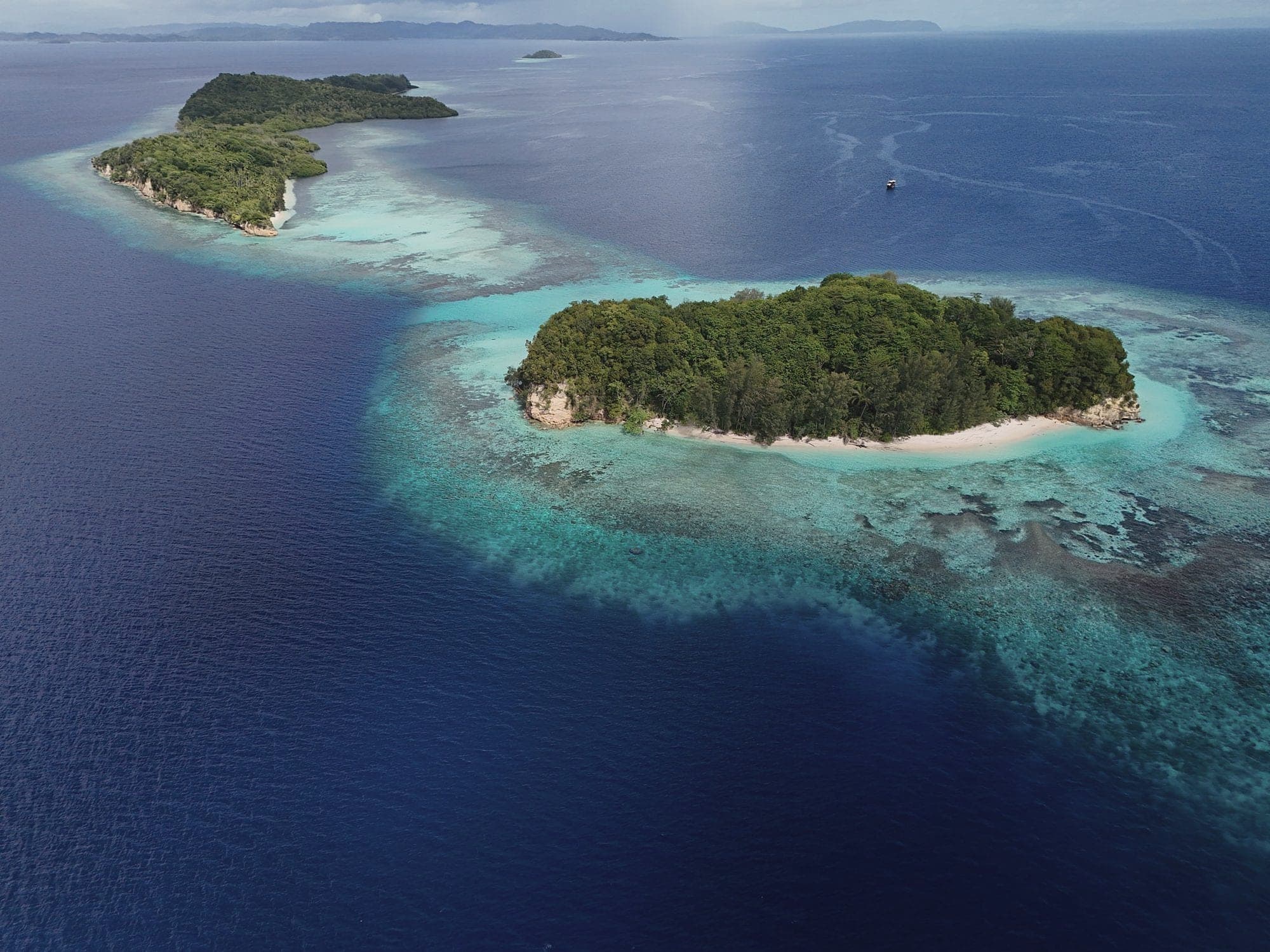
“From the air we could see what nobody in the water could see.”
From the journalBelow the surface
What the divers came back with
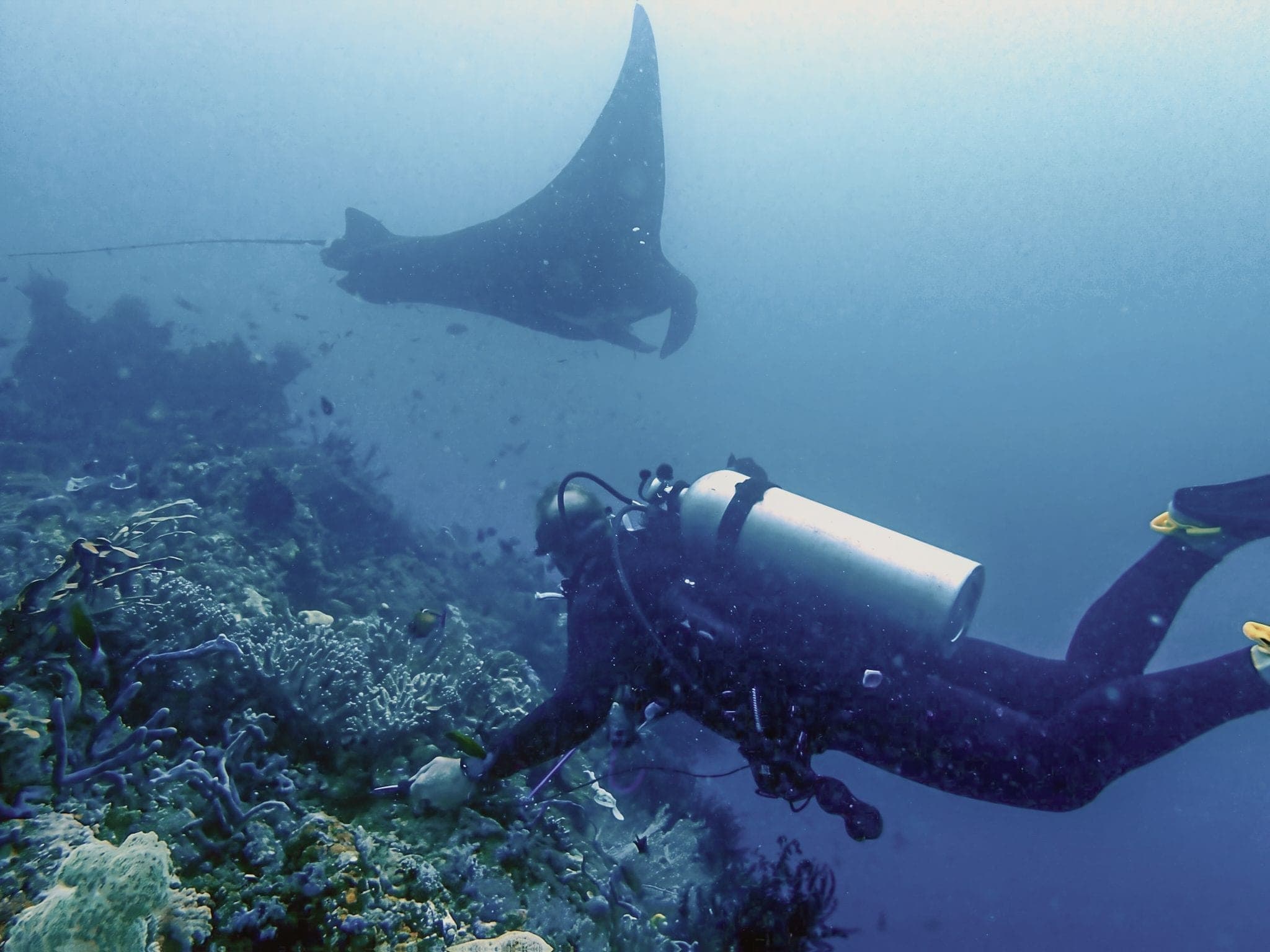
What the divers brought back each day was a list that reads like a documentary script. Manta rays over the cleaning stations at Eagle Rock and Shadow Reef, sometimes alone and sometimes in formations of three or four. Wobbegongs lying camouflaged on the sand, entirely unbothered by the people hanging above them. Bumphead parrotfish crunching coral loudly enough to hear through a regulator.
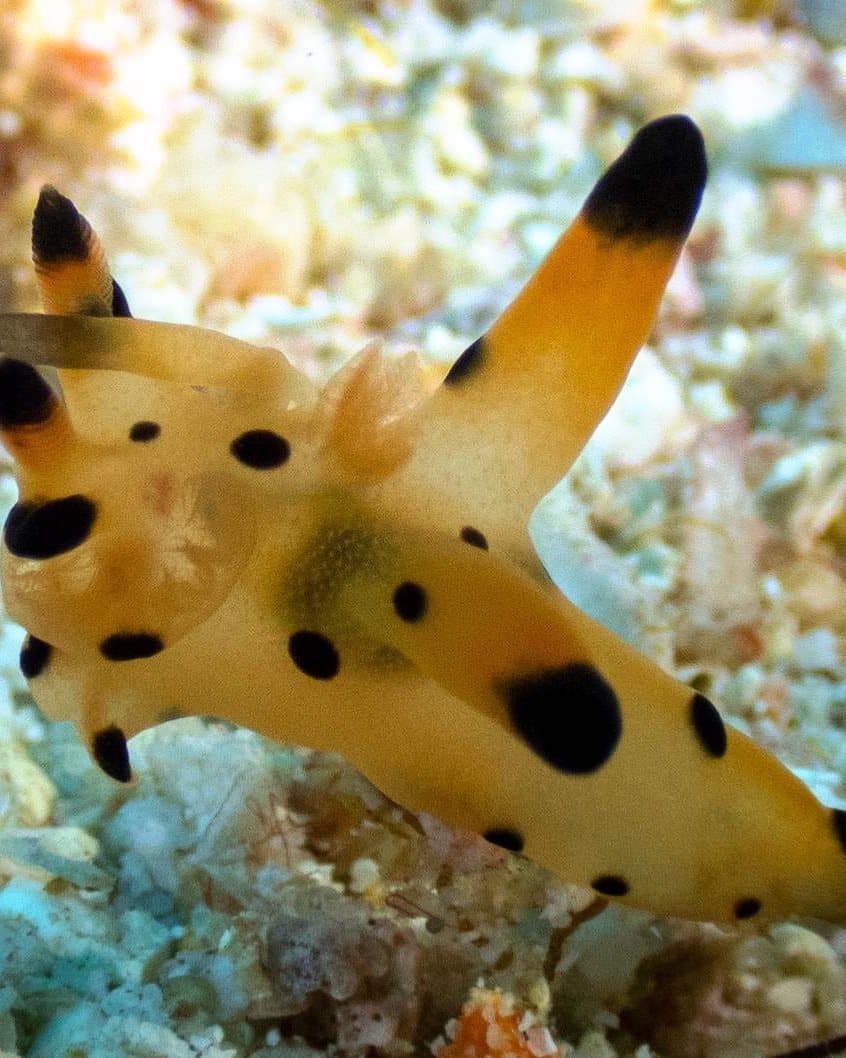
At Four Kings and Citrus Ridge there were bait balls, with trevallies and tuna driving through them. At Melissa's Garden the shallows held thousands of anthias moving like a single animal. And between the headline moments, the small things: nudibranchs in colours that look invented, small enough to swim past and bright enough to stop for.
Raja Ampat sits in the Coral Triangle, and the list above is the reason divers cross the world to reach it. We cannot add a diver's view of our own. What we can say is that the people coming up the ladder each morning were not short of things to describe.
The rhythm
What the days actually look like
The rhythm sets itself within about a day and a half. A light breakfast before the first dive, because nobody wants a heavy one. The divers go. The rest of us take the top deck. Between dives there is fruit and fresh juice and more snacks than any reasonable person needs. Lunch and dinner are the real meals: Indonesian cooking alongside international dishes, grilled seafood, curries, and bread baked that morning.
Our cabin was a top deck corner with windows on two sides, which meant waking to mist coming off jungle-covered islands and no sound but water against the hull. It is the cabin we would ask for again. If you are prone to seasickness, though, ask for lower and midship instead and give up the view. It is a fair trade on the longer crossings, and nobody enjoys a top deck corner from the bathroom floor.
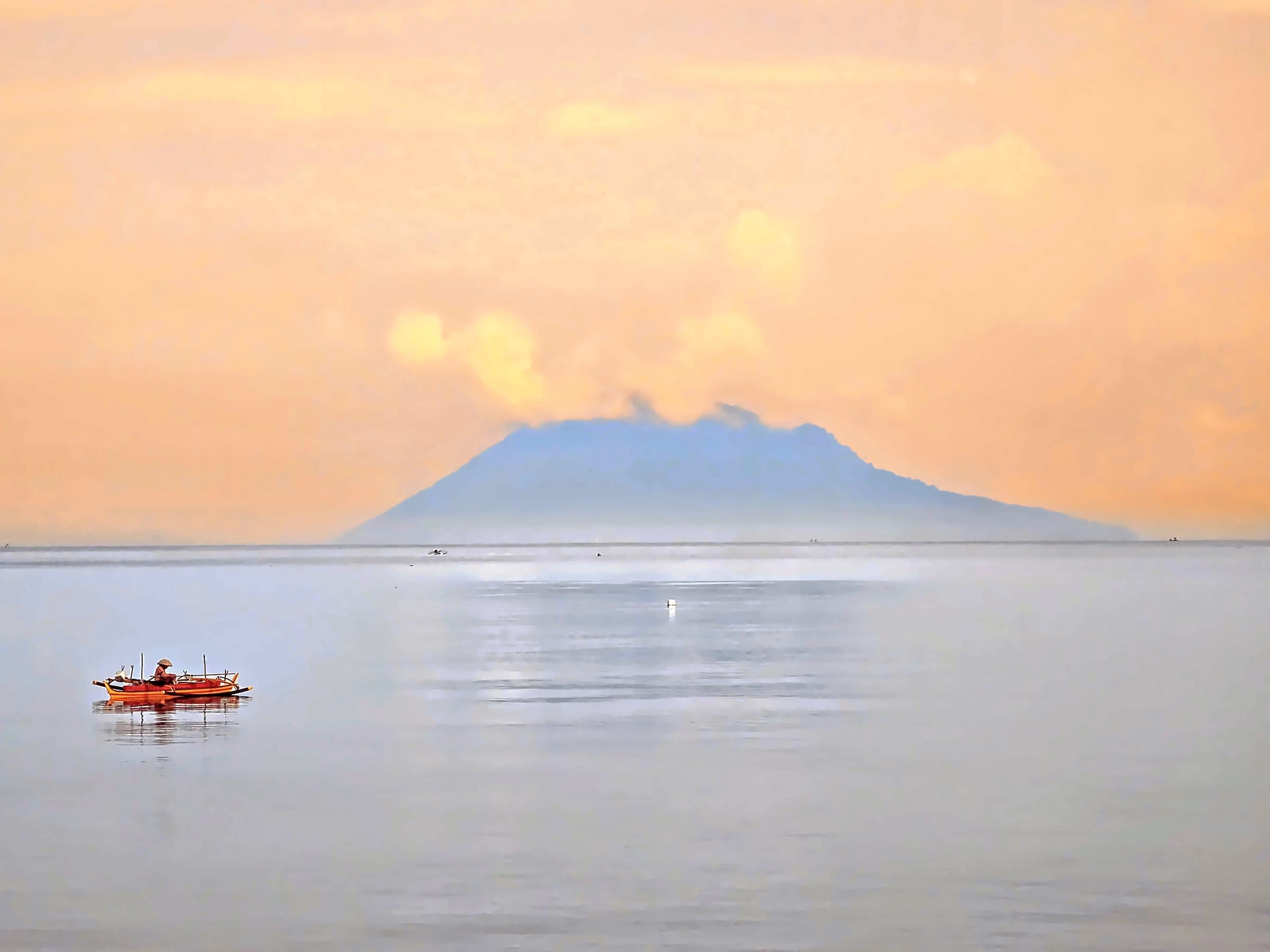
Evenings belong to the upper deck. The sun goes down over the karsts, the sky runs through orange into purple, and then the stars arrive in a quantity that is genuinely difficult to describe to anyone who has only seen a city sky. There is nowhere to be, and nothing to arrange for the morning. The boat will have moved by the time you wake.
The honest part
Who this trip is for
It is for divers, obviously, and for divers it is close to the top of the list anywhere in the world. But it is also, and this is the part that surprises people, entirely worth doing if you never put your face in the water. The landscape does enough on its own.
If you are a couple where one of you dives and one does not, this is one of the few trips where that arrangement works without anybody feeling short-changed. The diver gets some of the best water on the planet. The other gets the top deck, the drone, the karsts at sunset, and a view of the whole archipelago that the divers never see.
What it is not is a trip you drop into casually, and the reasons start with the map.
The journey in
Getting there, and the night we always add
From western North America, Raja Ampat is two travel days each way. The long-haul flights get you into Indonesia. A domestic flight then takes you east to Sorong, the town on the western tip of Papua where liveaboards in this part of the archipelago begin and end.
That last flight is the one that moves. Domestic schedules change, and a boat with a full cabin list does not wait for one guest whose connection slipped. So we build a buffer night at each end: one before the boat, so a delay costs you an evening rather than the trip, and one after, so the long flight home does not hang on a short one that may run late.
We say this to every client who asks us about Indonesia, and nobody has ever come back to tell us it was unnecessary. It is the single most useful thing we can tell you about this trip, more useful than any cabin advice, and it costs two hotel nights.
If you stay dry
Doing it without diving
Bring the drone, if you fly one, and check the rules before you go. Bring a long lens. Bring more memory than you think, because a week of mornings over this water fills cards faster than any trip we have taken. The trip stands up without a single dive.
The top deck becomes your territory for most of the day, and the crew look after the people on it as carefully as the people in the water. There is fruit, there is juice, there is shade, and there is the slow procession of islands going past. For a certain kind of traveller, that is a better week than the dive deck offers.
The vessel
The boat itself
The Harmoni is custom built, a forty-two metre phinisi in the traditional Indonesian shape, finished to a standard you would expect from a good hotel. The dive masters run the deck so that nobody lifts their own tank. The kitchen turns out serious food twice a day in the middle of nowhere, which is harder than it sounds this far from anywhere.
The number that matters most is the crew. Twenty-one of them, for a boat of this size, is what makes the week feel effortless rather than merely comfortable. People write "built for adventure, finished to five-star standard" about a lot of boats. It is true of this one.
It is hard to leave a place like that and not feel changed by it. We would go back, and we would take the ten days over the seven without thinking about it.
From the journal · The Travelling T · Written March 2025