Destination guide · South America
Colombia
Four hard days on foot to a city older than Machu Picchu, then slow days above the coffee farms. The order matters more than either half.
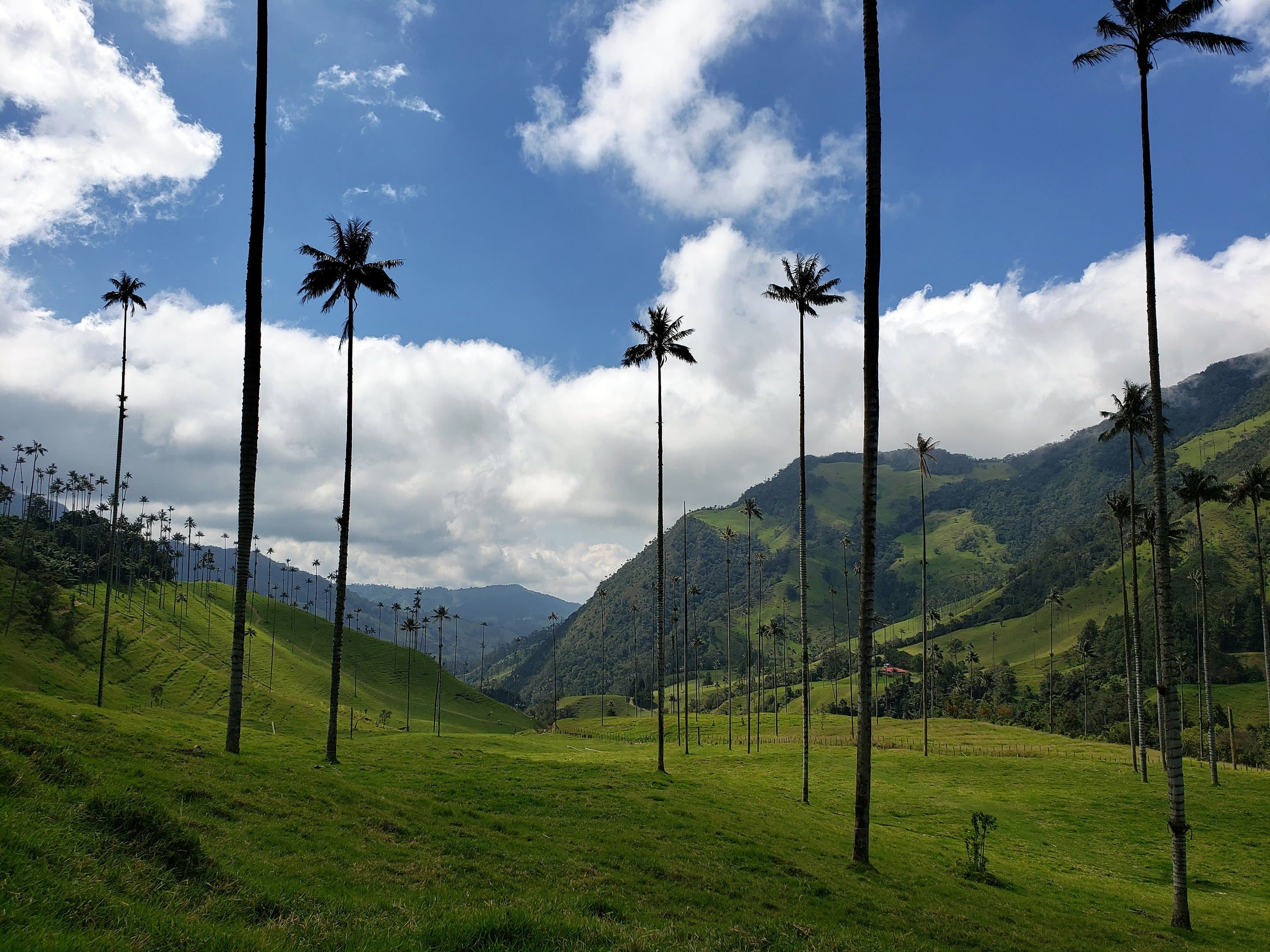
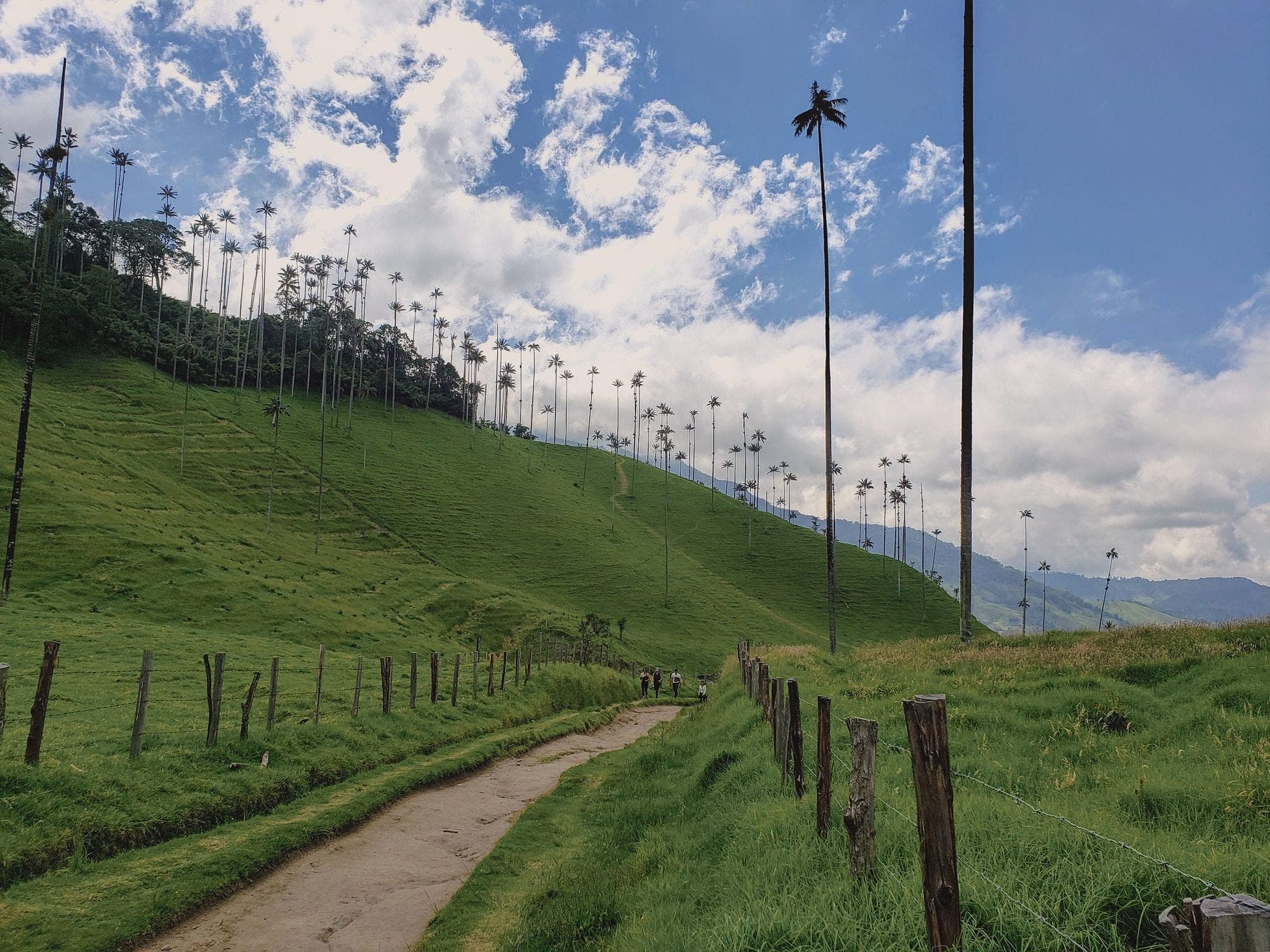
Wax palms, Cocora valley, Colombia
- Best months
- December to March
- Suggested length
- 11 to 13 nights
- On foot
- Four days to the Lost City
- Indicative price
- From CA$8,900
Why we plan Colombia
A trek that earns the rest of the trip
We walked to Ciudad Perdida in the Sierra Nevada de Santa Marta, then spent our recovery in Quindio, sleeping above the coffee farms and taking the long way through the Cocora valley and the plaza at Filandia. It is a trip of two halves, and we plan it that way on purpose.
The jungle comes first, while your legs are fresh and before you have settled into anything comfortable. The coffee country comes second, when a glass wall over the hills and a pool that holds the sunset are exactly what four days of mud and river crossings have earned. Turn it round and both halves are worse.
Filandia rather than Cartagena is the town we would send you to, and we will happily argue about it.
Our advice, the short version
The Ciudad Perdida trek
Teyuna, the Lost City, was built by the Tairona around the ninth century, centuries before Machu Picchu, and sits on a ridge deep in the Sierra Nevada. There is no road. You walk in and walk out, roughly 45 kilometres over four days, along jungle trails, through rivers, past Kogi and Wiwa villages, and finally up some 1,200 stone steps to the terraces.
Only licensed operators run the trek, and nights are in simple camps with bunks and mosquito nets. We book a private guide so you can leave half an hour ahead of the group tours. On a trail this narrow, half an hour is the whole difference, and it means the terraces are quiet when you reach them.
The site closes every September, sometimes into October, for maintenance and for ceremonies held by the Indigenous communities of the Sierra Nevada. We plan around it.
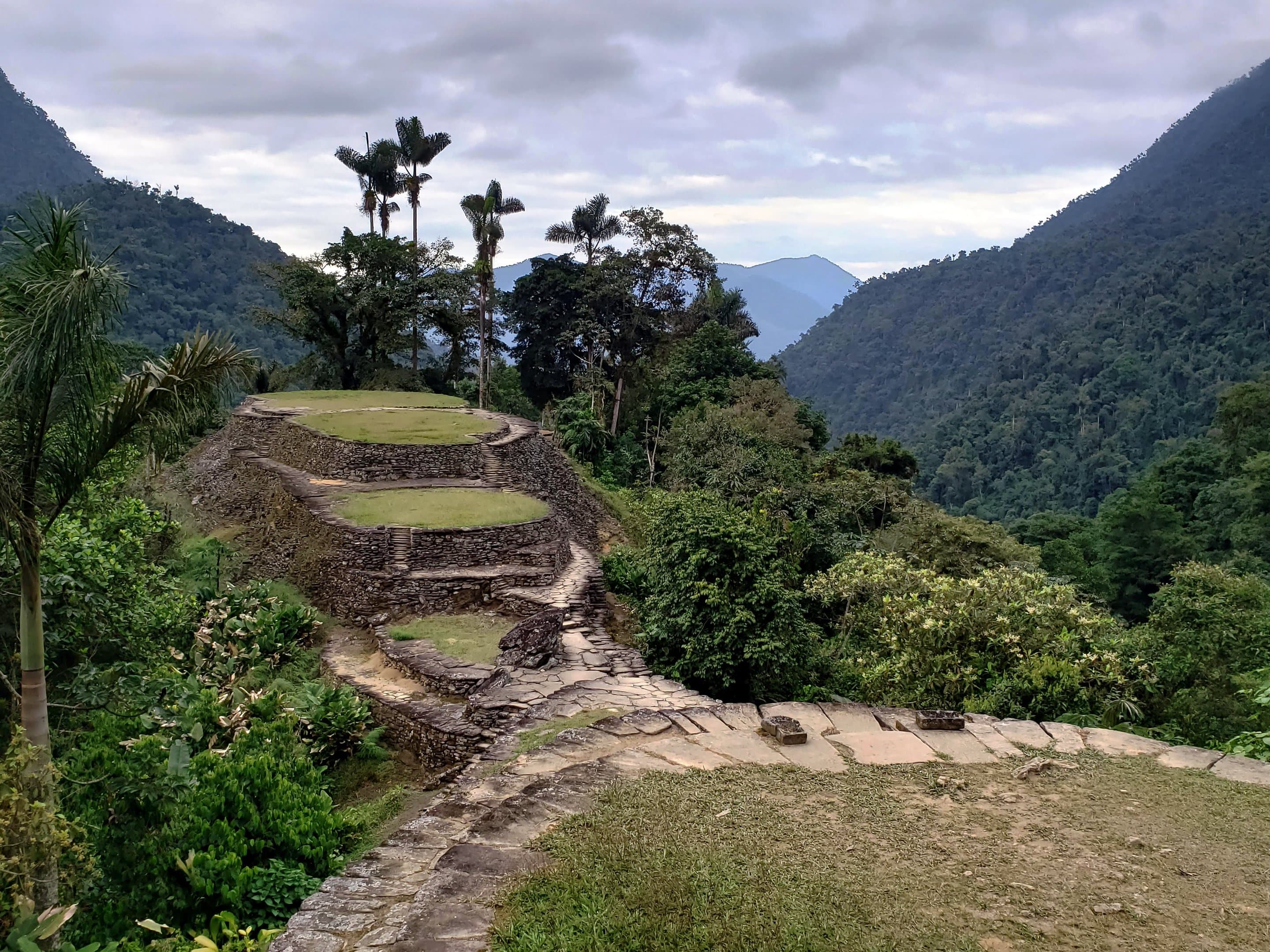
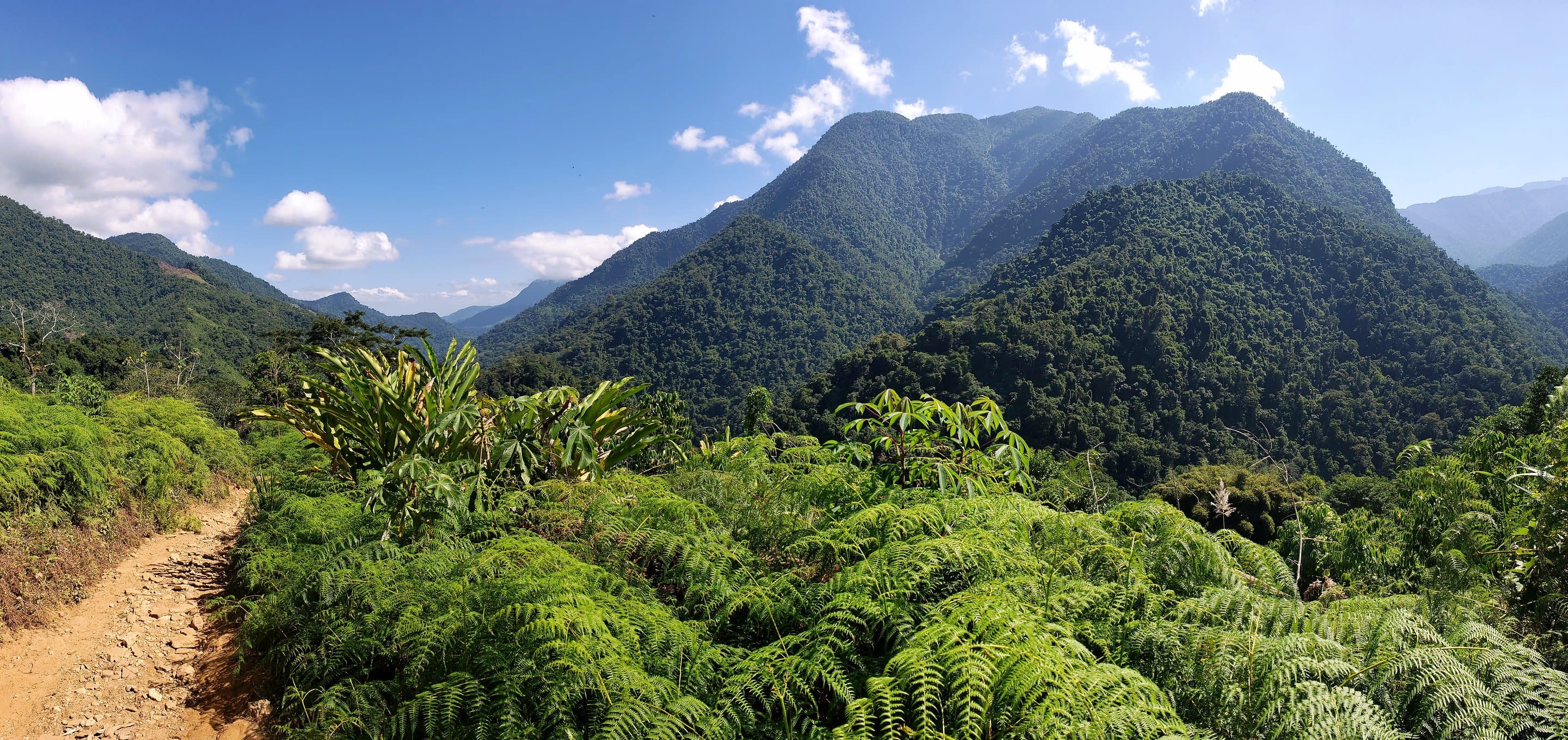
The trail into the Sierra Nevada de Santa Marta, Colombia
Coffee country, and Bio Habitat
The coffee region sits on the slopes of the central Andes, around Armenia, Pereira and Manizales, mild and green all year at somewhere between 1,300 and 2,000 metres. After the Sierra Nevada it feels like a different country. Farm visits, a morning learning how a cup is picked, sorted and roasted, and long afternoons doing very little.
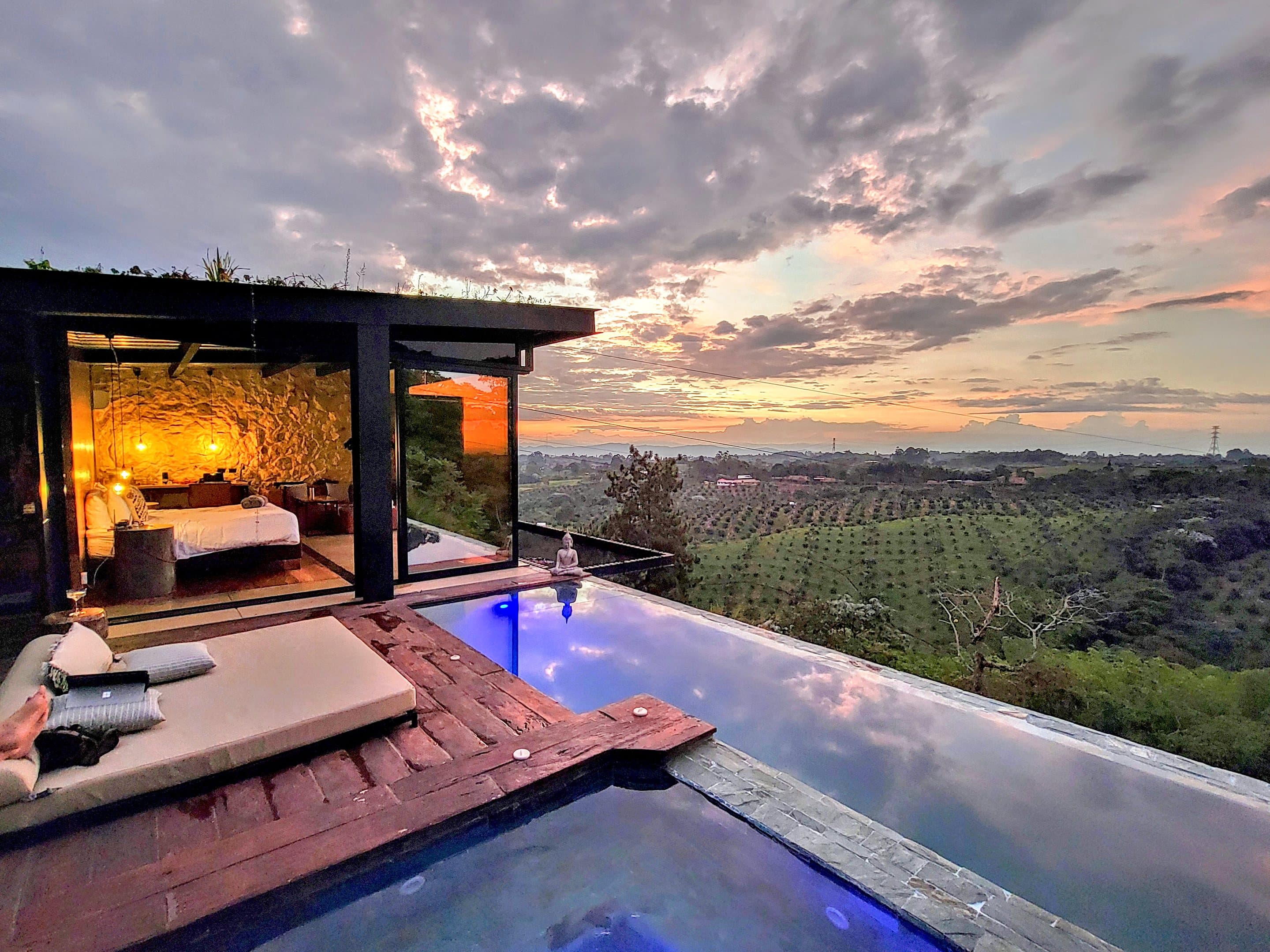
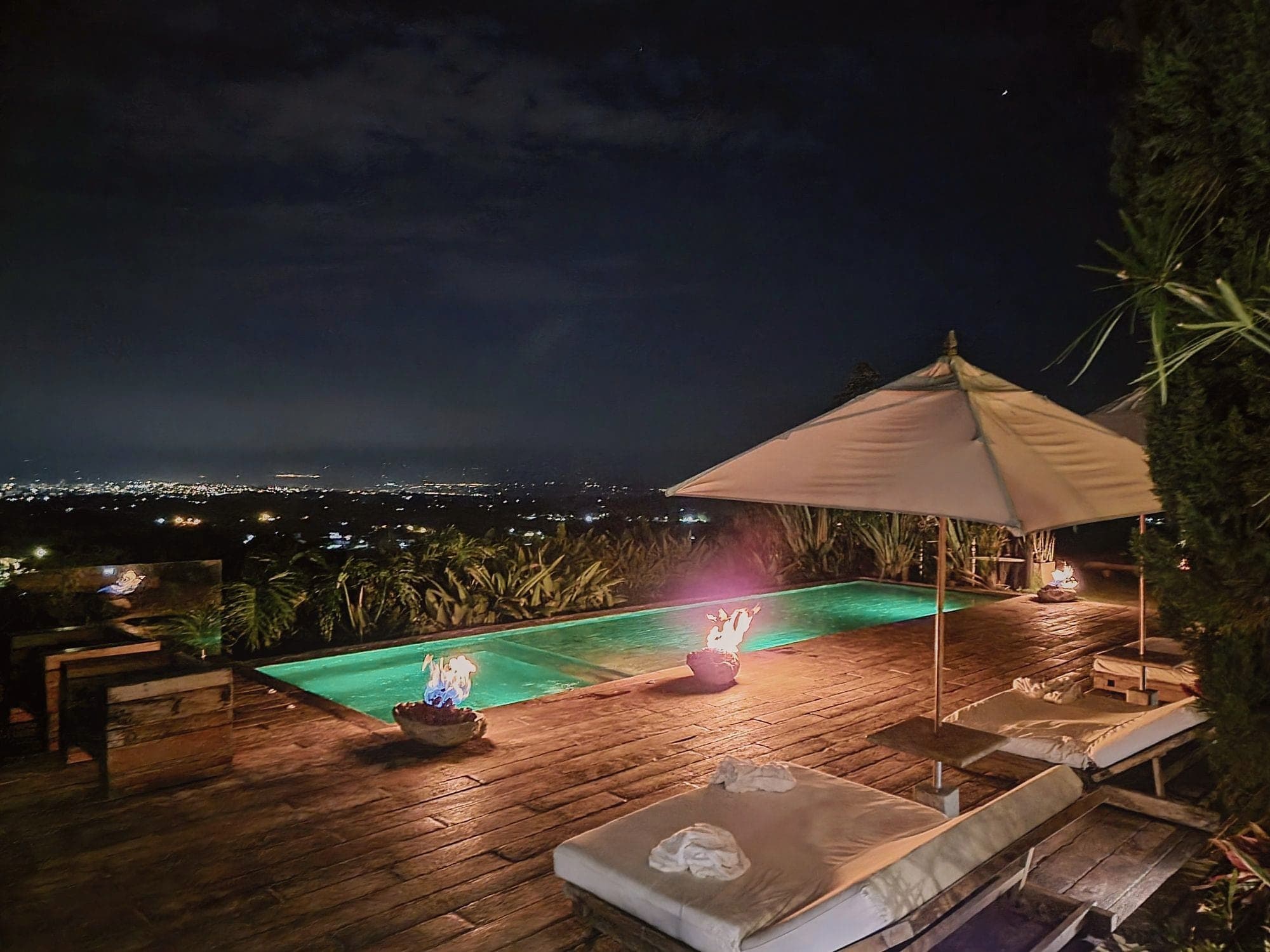
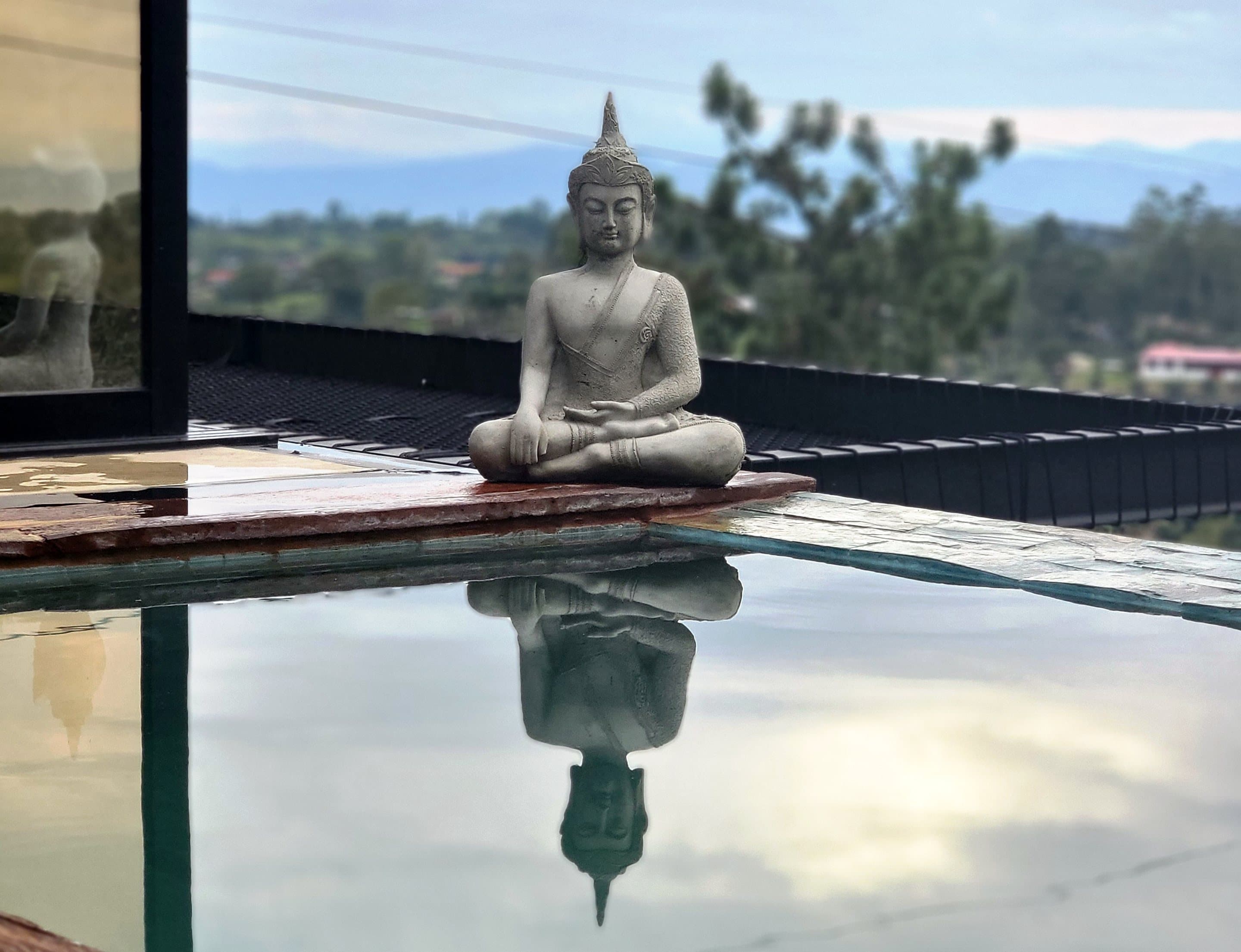
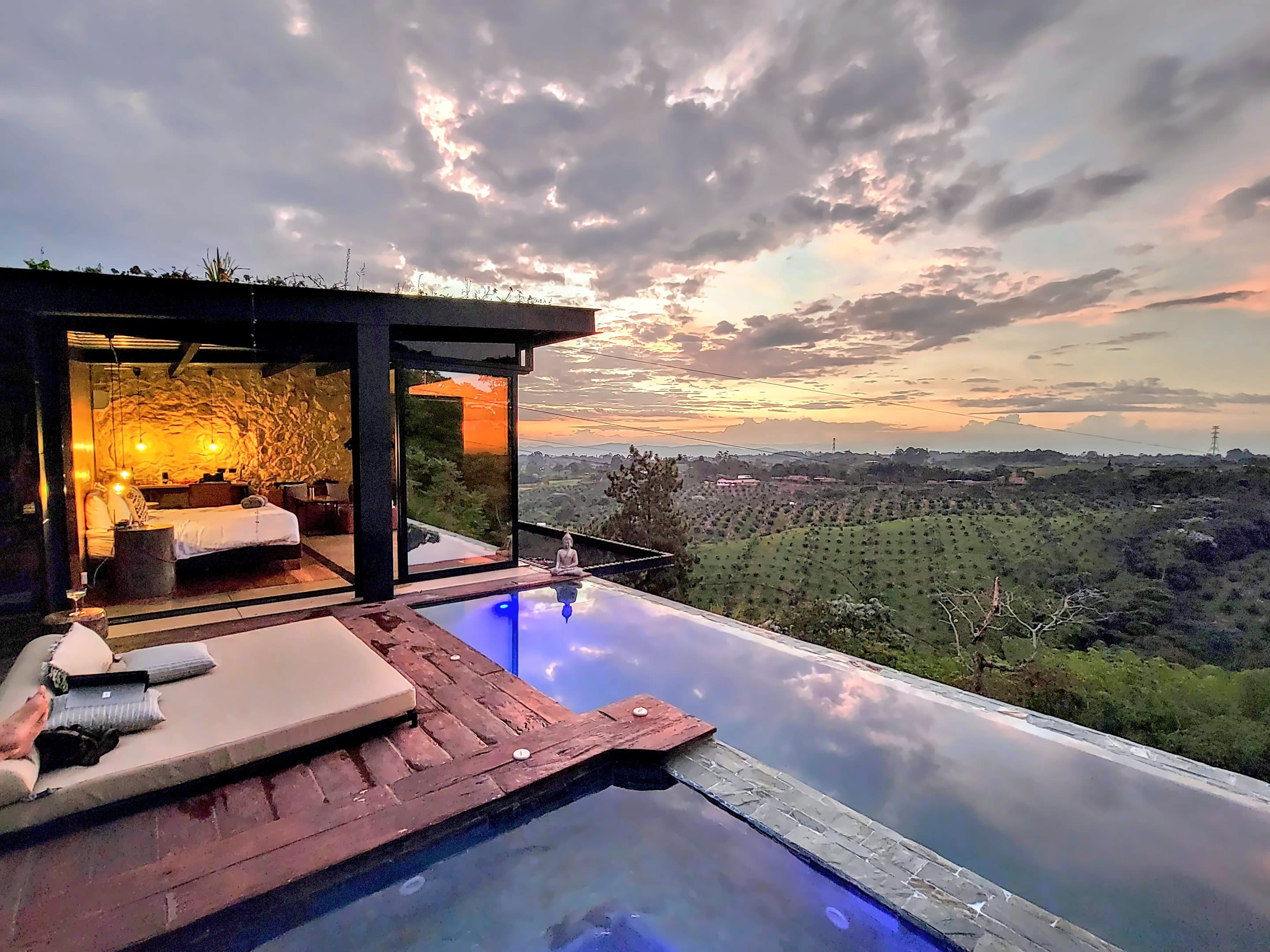
We stayed at Bio Habitat in Quindio, a small hotel where the suites are glass boxes looking out over the coffee hills, each with its own pool at the edge of the view. At night the terrace pool lights up green and the lights of the valley spread out below. It is the right place to stop moving for a while.
The Cocora valley and Filandia
The Cocora valley, above Salento, is where the Quindio wax palm grows: Colombia's national tree, the tallest palm in the world, standing in open pasture like a line of pins. A loop walk climbs through cloud forest and comes back down among them. Go early, before the day visitors arrive from Salento.
Then Filandia, a hill town most people drive past. Cobbled streets, painted wooden balconies, a viewpoint over the valley, and small hand-pushed carts doing laps of the plaza. Salento is busier and better known. Filandia is the one we would send you to.
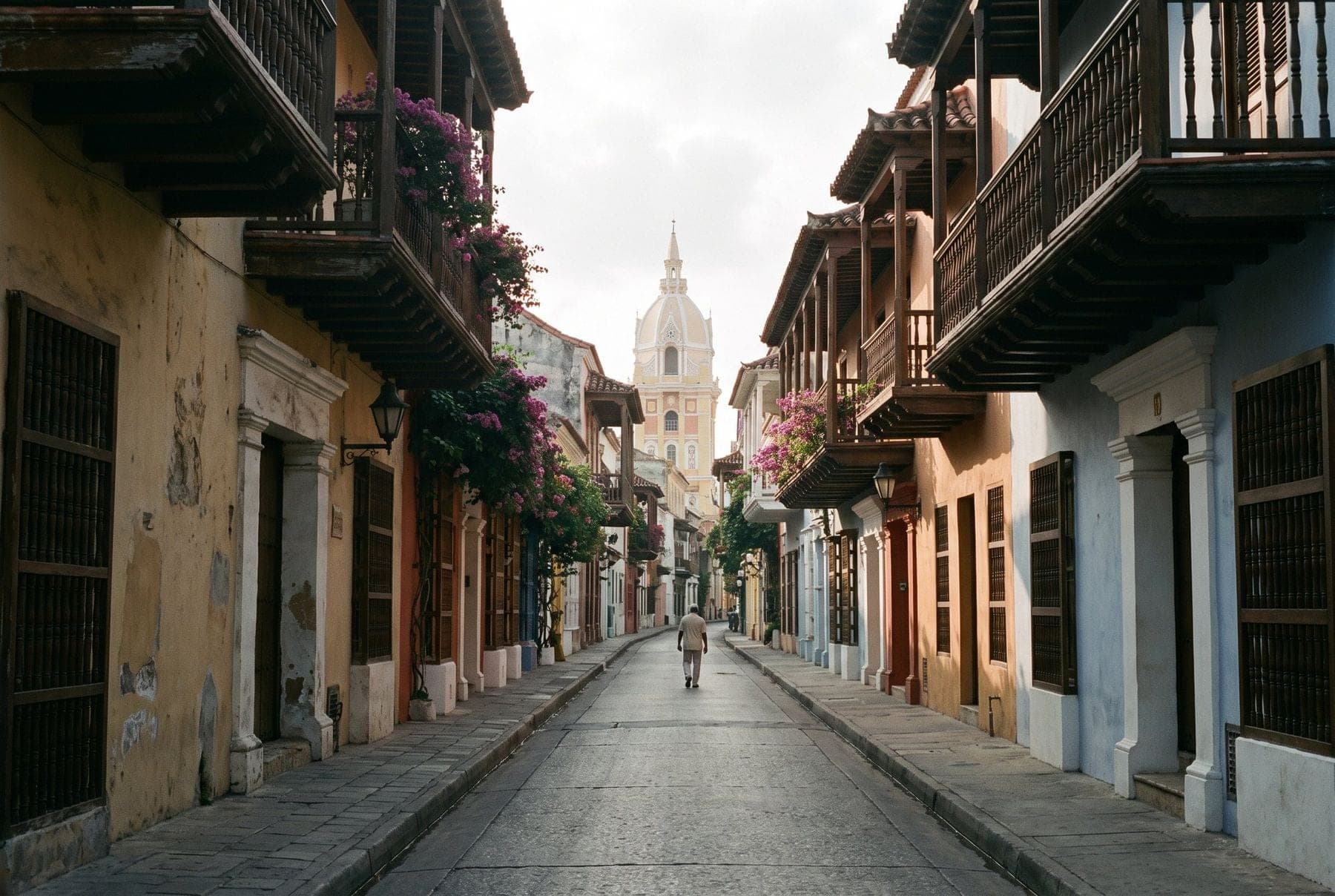
The Caribbean coast: Santa Marta and Cartagena
Santa Marta is the base for the trek, and the night before and the night after are spent there. We choose a quiet hotel in the old town or just outside it, and leave room for a day in Tayrona National Park if you still have legs.
Cartagena is a short flight along the coast. The walled city is beautiful and busy: balconies, bougainvillea, churches, and heat. Two nights at the end works well for people who want a city and the sea before they fly home. We add it when it suits you, rather than by default.
When to go
December to March, with a second window in summer
Colombia sits close to the equator, so temperature changes with altitude rather than month. What changes through the year is rain. The trek is the part most affected by it.
A sample route
The Lost City, Then Coffee, 11 nights
A starting point, not a product. We change the dates, the hotels and the pace to suit the people travelling. Add Cartagena at the end and it becomes 13.
Indicative price
From CA$8,900
Indicative, per person, confirmed at quote
- Based on two travelling together, private trek guiding and transfers
- Includes domestic flights within Colombia
- International flights quoted separately
- Virtuoso benefits at the hotels where they apply
A custom multi-stop journey like this one carries a CA$400 design fee, credited to the trip when you book.
Questions we are asked
Before you plan Colombia
Is Colombia safe for travellers today?
The places on this page are well travelled and we have walked them ourselves. The Government of Canada's travel advice sets a level for the country as a whole and stricter levels for some border and rural regions; we read it before we plan, route around the areas it flags, and check it again before you leave.
Day to day, the advice is the same as in many big cities: private transfers rather than street taxis, a guide in unfamiliar places, and nothing valuable on show. Your advisor is a message away the whole time you are there.
How hard is the Lost City trek?
Hard, but not technical. Around 45 kilometres over four days, steep climbs and descents on clay that turns slick in rain, river crossings on foot, heat and humidity, and about 1,200 stone steps at the end. Anyone who walks regularly and is happy on uneven ground for six hours a day can do it.
Mules carry your bag if you want them to, and we can stretch it to five days to make the days shorter.
Will the altitude in Bogota affect us?
Bogota sits at about 2,640 metres. Most people notice it on stairs and sleep a little lightly the first night, little more. We keep the first day empty and, on this route, you are only there for a night before flying down to the coast at sea level.
Can we skip the trek and still see the country?
Yes. The coffee country, Cocora and Filandia make a gentle trip on their own, and pair well with Cartagena or with a few days in Medellin. The trek is the part people remember, but it is not compulsory.
Can we combine Colombia with Peru?
Yes, with a flight between Bogota and Lima. If you do both, we usually put Colombia first, then Peru's altitude in its proper order.
Keep reading
Where we stayed, the seasons, and the next guide
All active and cultural journeys →Field reports in the journal →
Plan a trip
Tell us whether you want the trek, the coffee hills, or both in the right order
A short first note is enough. We reply within one business day, and nothing is booked until you have a written quote in front of you.