Destination guide · South America
Peru
A canyon deeper than the Grand Canyon, a lake at 3,800 metres, a citadel in the cloud forest. Peru rewards the traveller who takes it in the right order, and punishes the one who rushes the altitude.
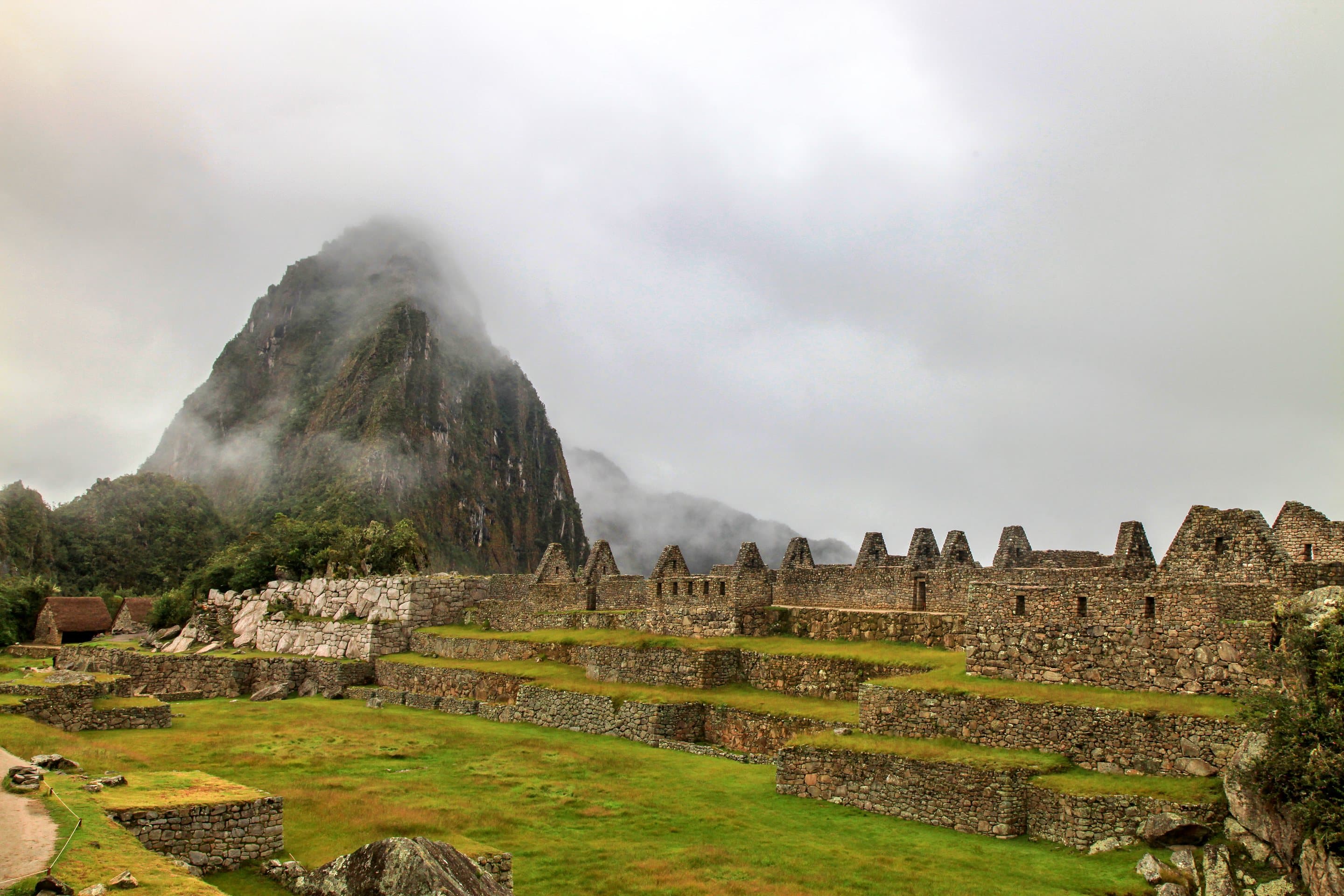
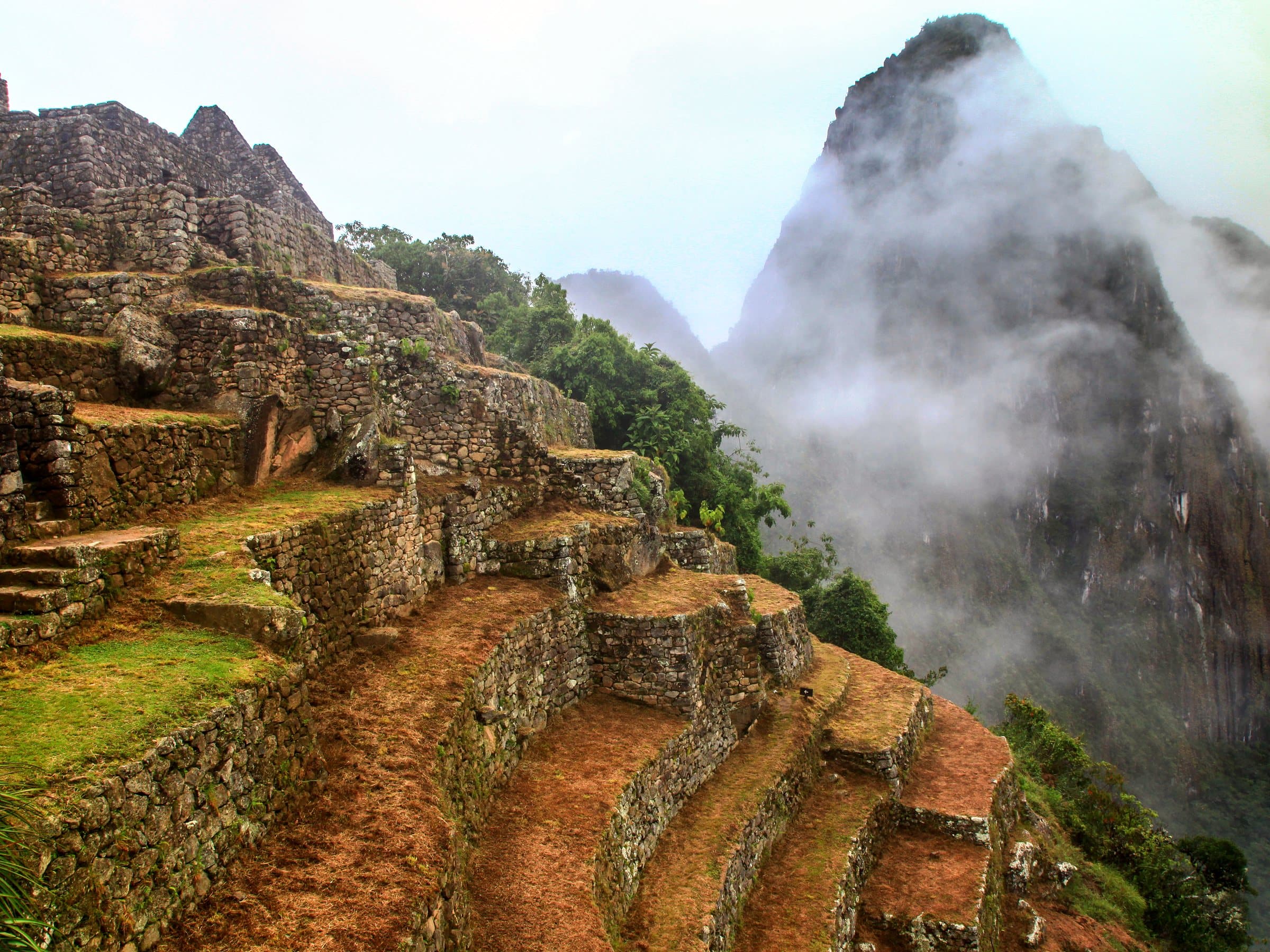
Machu Picchu and Huayna Picchu, Peru
- Best months
- May to September
- Suggested length
- 12 to 14 nights
- Altitude range
- 2,335 m to about 5,000 m
- Indicative price
- From CA$10,500
Why we plan Peru
Three altitudes, in the order your body can take them
We first travelled Peru and Ecuador in 2015 and have been back to Peru since, through Arequipa and the Colca, out onto Lake Titicaca, up to Vinicunca and down into the cloud forest at Machu Picchu. Most of what we know about planning it came from getting the order wrong once.
The usual itinerary flies you from sea level in Lima straight to Cusco at 3,400 metres and asks you to enjoy it. Ours climbs in steps, starts in the white-stone city of Arequipa, and leaves the hardest heights until you have earned them. The citadel, the lake and the canyon are the same. How you feel at each one is not.
Do the Colca slowly rather than as a day trip, and stay inside the gates at Machu Picchu if the budget will carry it.
Our advice, the short version
Machu Picchu and the Sacred Valley
The Sacred Valley sits lower than Cusco, around 2,870 metres, which makes it the right place to arrive in the region and the right place to sleep before the citadel. Weavers in Chinchero, the salt pans at Maras, the terraces at Moray, and a train from Ollantaytambo along the Urubamba river into the cloud forest.
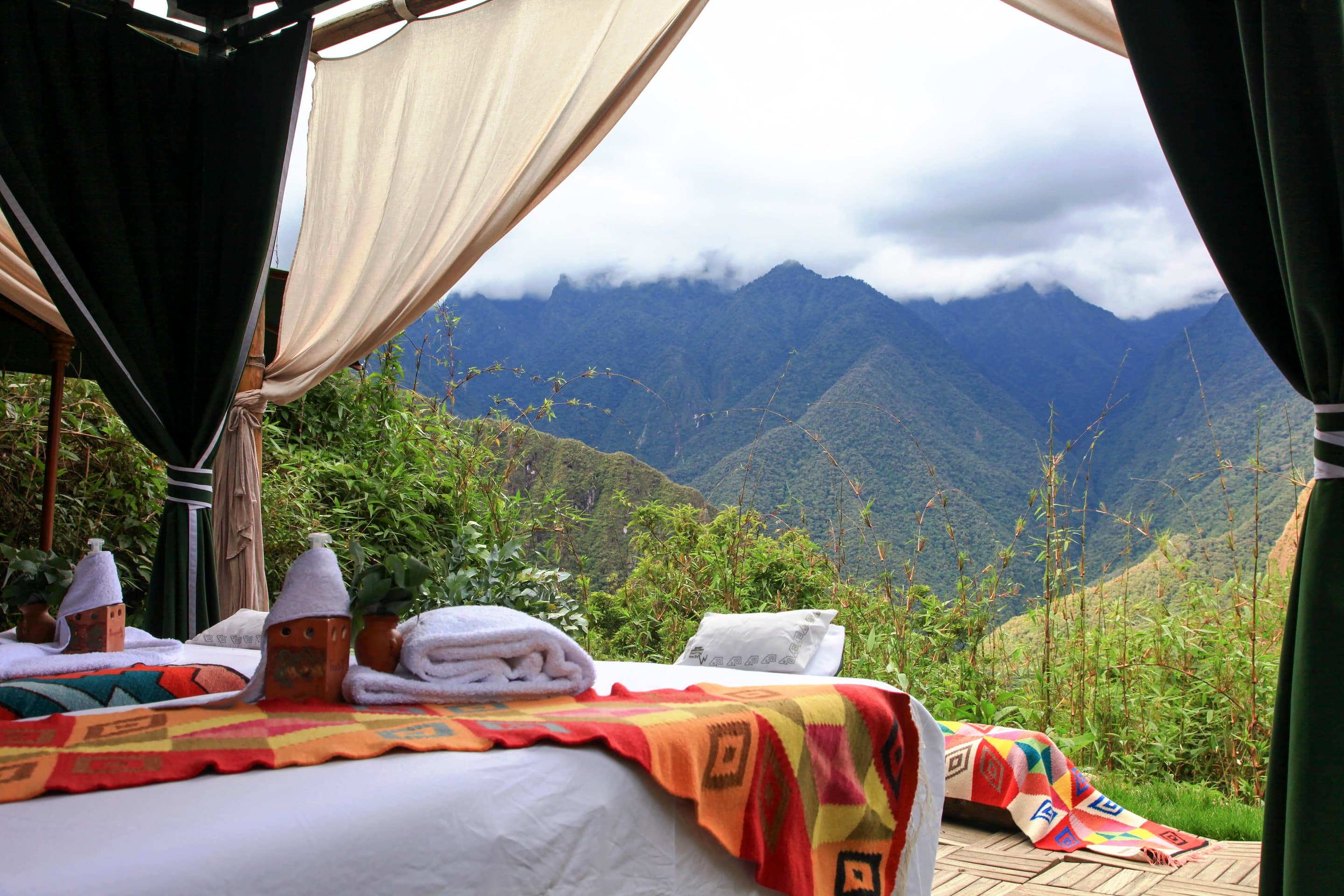
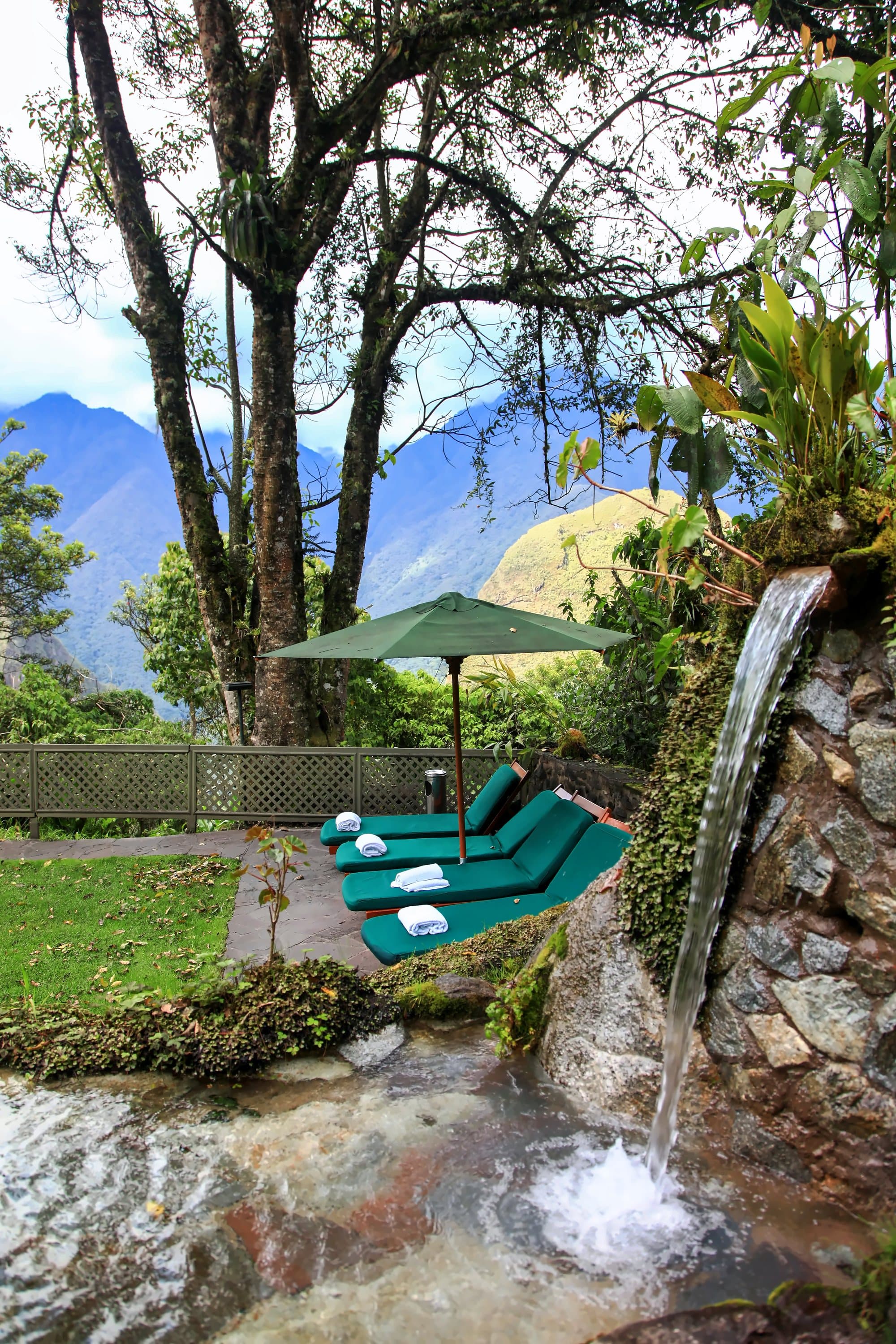
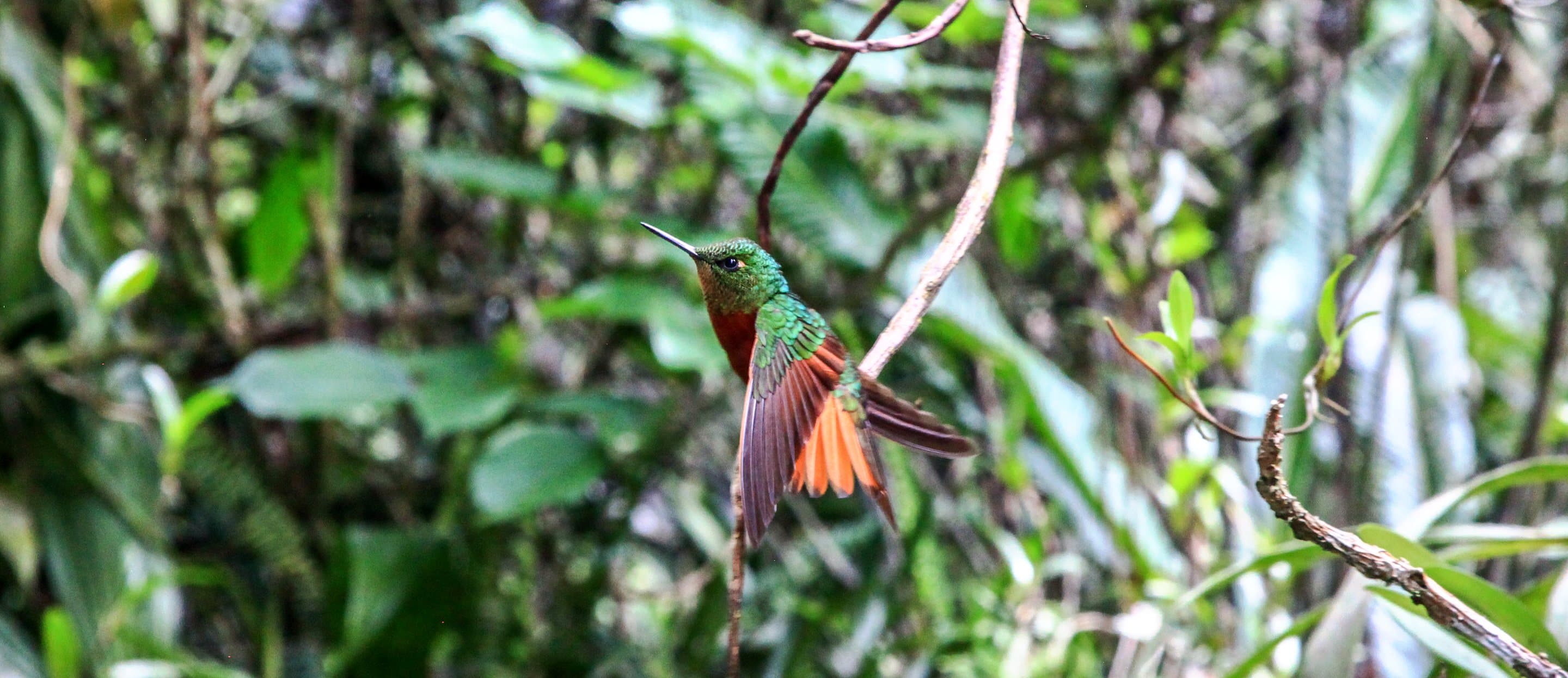
At Machu Picchu we book Belmond Sanctuary Lodge, the only hotel inside the archaeological park. That one fact reorganises the day. You walk in after the last trains have taken the day visitors down the valley, and you are back at the gate before the first ones arrive in the morning. Its terrace looks straight across the gorge, and the garden around the pool is full of hummingbirds.
Entry to the citadel runs on timed tickets with set circuits, and a licensed guide is required. We book the circuit and the hour before anything else, then build the train around them.
Colca Canyon, Peru
Arequipa and the Colca Canyon
Arequipa is where we start most Peru journeys. It sits at 2,335 metres under three volcanoes, the old centre built from pale volcanic stone, with the Santa Catalina monastery taking up a whole quarter of it. Two nights here is the first step up from the coast, and a good city to be in while you adjust.
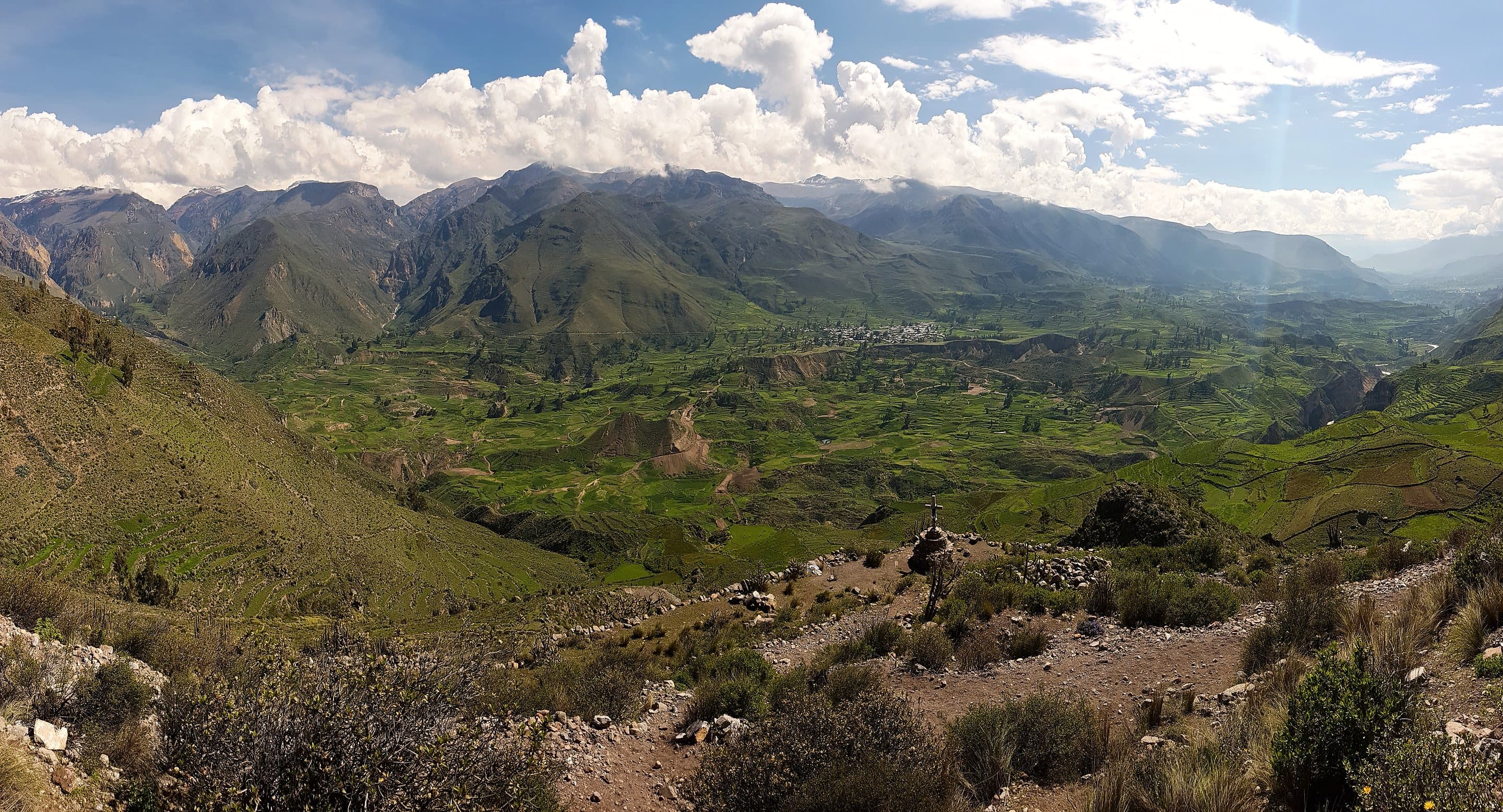
From Arequipa the road climbs over the Patapampa pass at roughly 4,900 metres and drops into the Colca Valley, about four hours away. The canyon is over three thousand metres deep, terraced by people who farmed it long before the Inca. Most visitors do it as one exhausting day trip. We give it two nights, in the valley lodges around Chivay and Yanque, Belmond Las Casitas among them, so the morning at the Cruz del Condor lookout is an easy start rather than a 3 am departure.
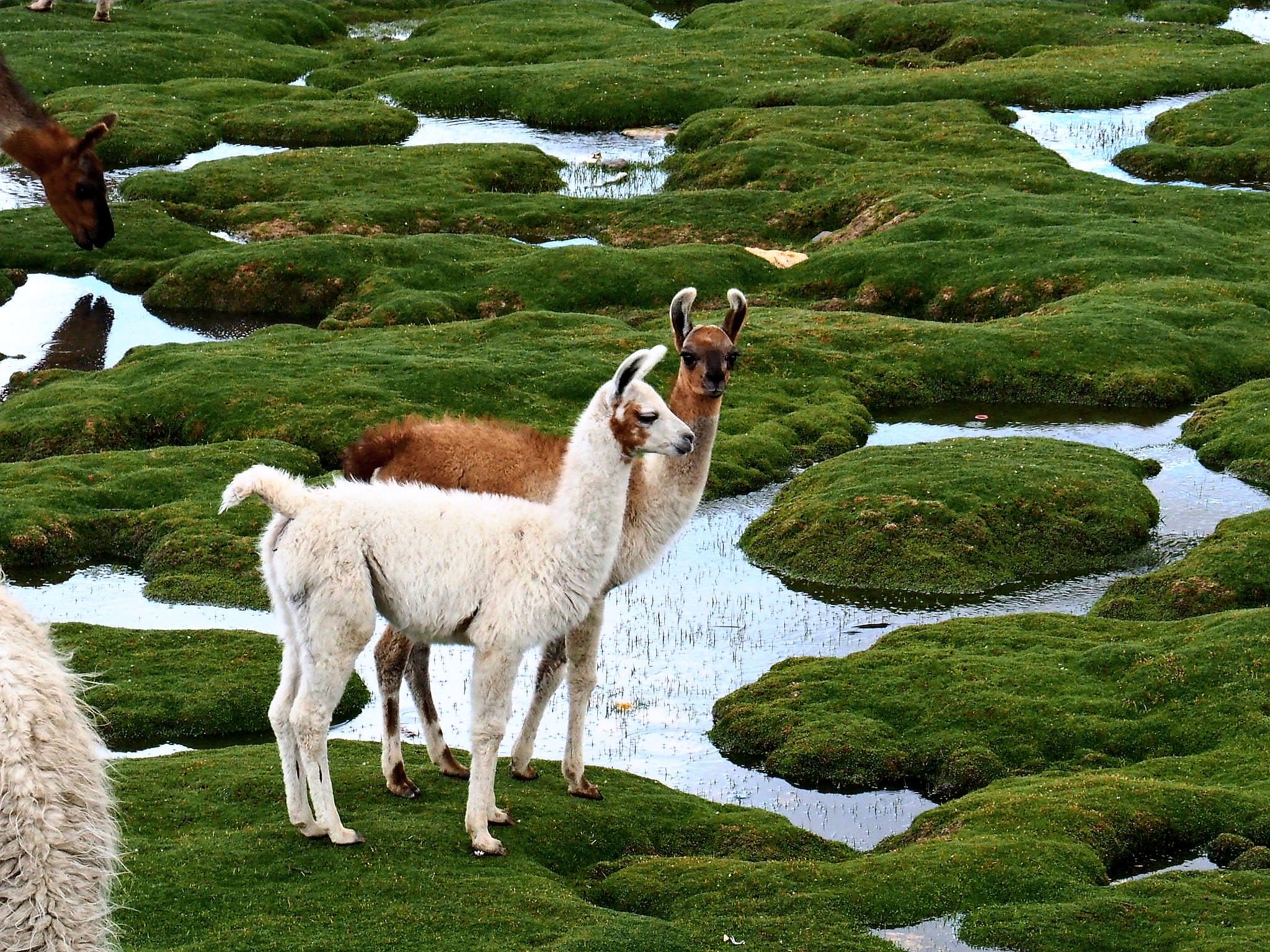
The condors use the morning thermals and come up out of the canyon to eye level. Vicuna, alpaca and llamas graze the high wetlands on the way in.
Chivay sits around 3,600 metres. A night there before Puno is a gentler step than going straight to the lake, and it turns the canyon into a place rather than a stop.
Lake Titicaca
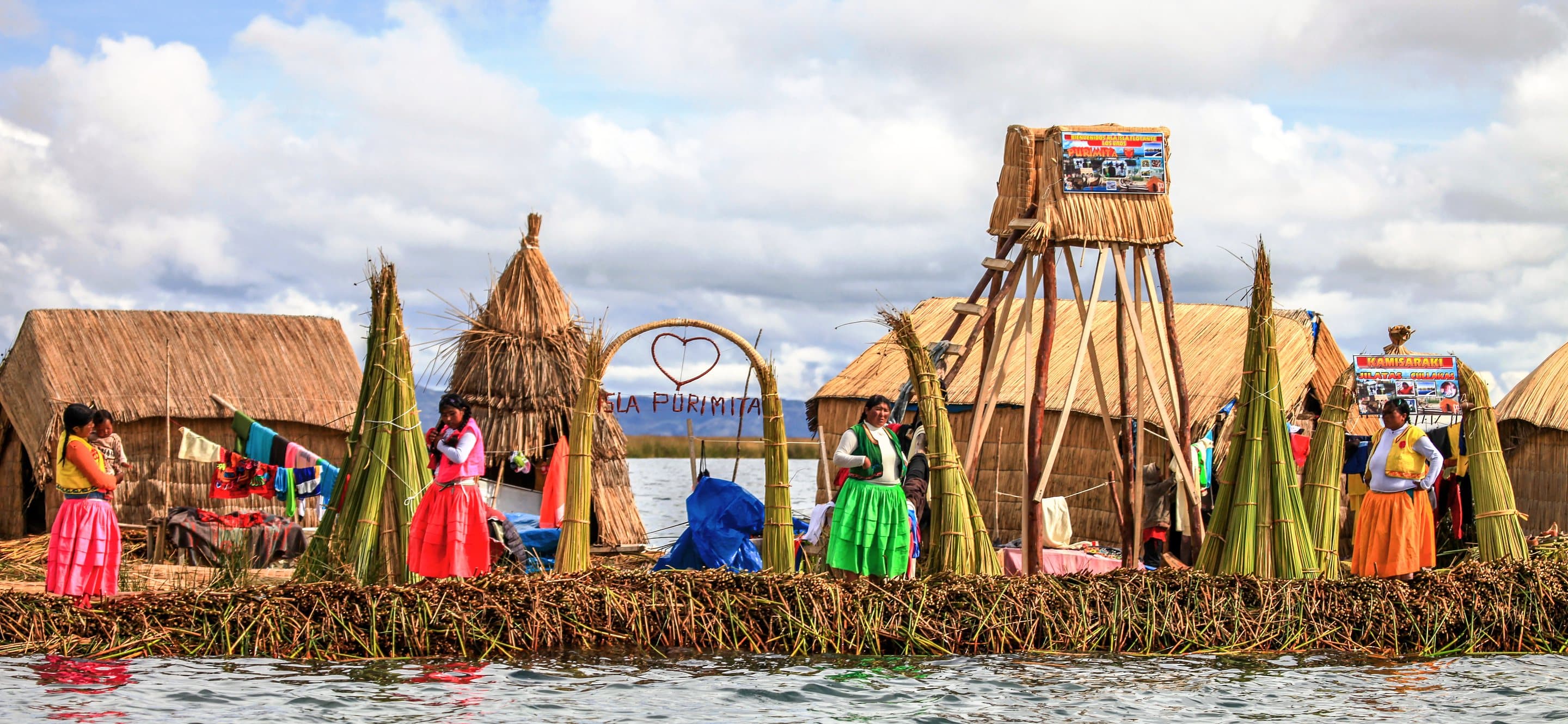
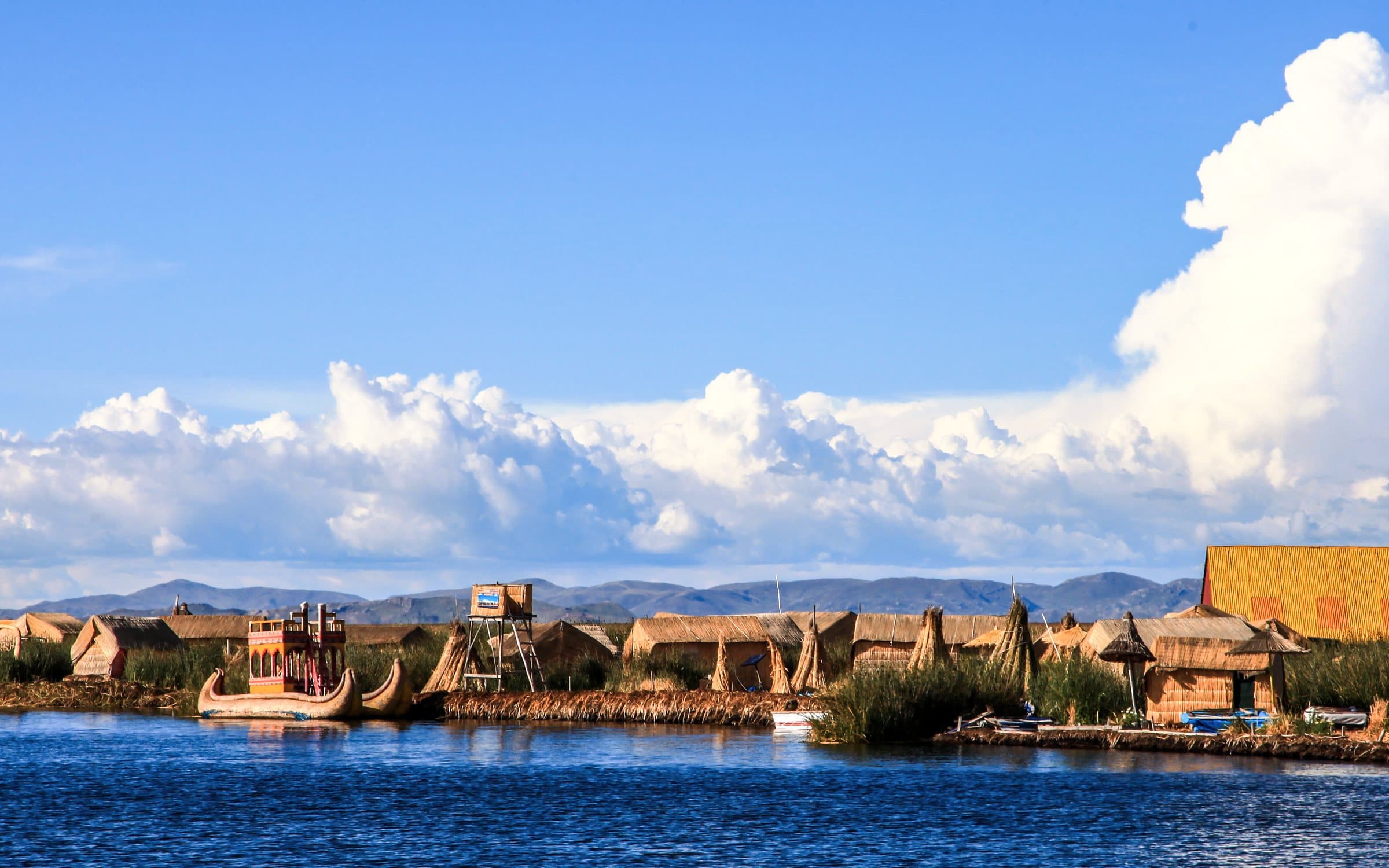
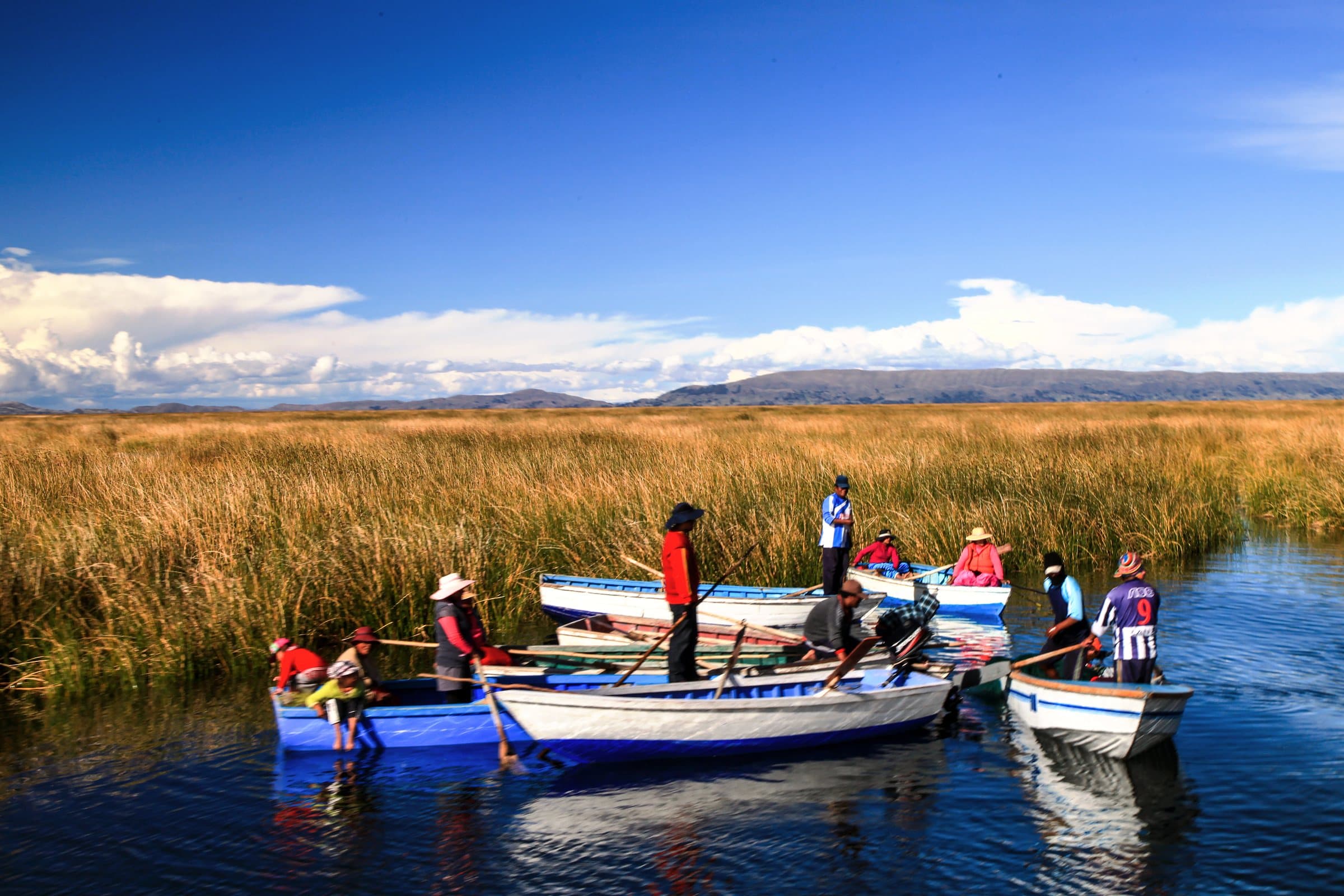
At about 3,810 metres, Titicaca is the highest stretch of the journey you will sleep at, which is why it comes after the Colca and not before. From Puno, boats go out through the reed beds to the Uros islands, built and rebuilt by hand from layers of totora reed, with reed houses and reed boats to match.
Further out, Taquile is solid ground: stone paths, terraces, and a weaving tradition recognised by UNESCO, where the men knit and the textiles say something about who made them. We would rather you spent a full day on the water with a private boat than tick both islands from a crowded launch.
Vinicunca, Rainbow Mountain
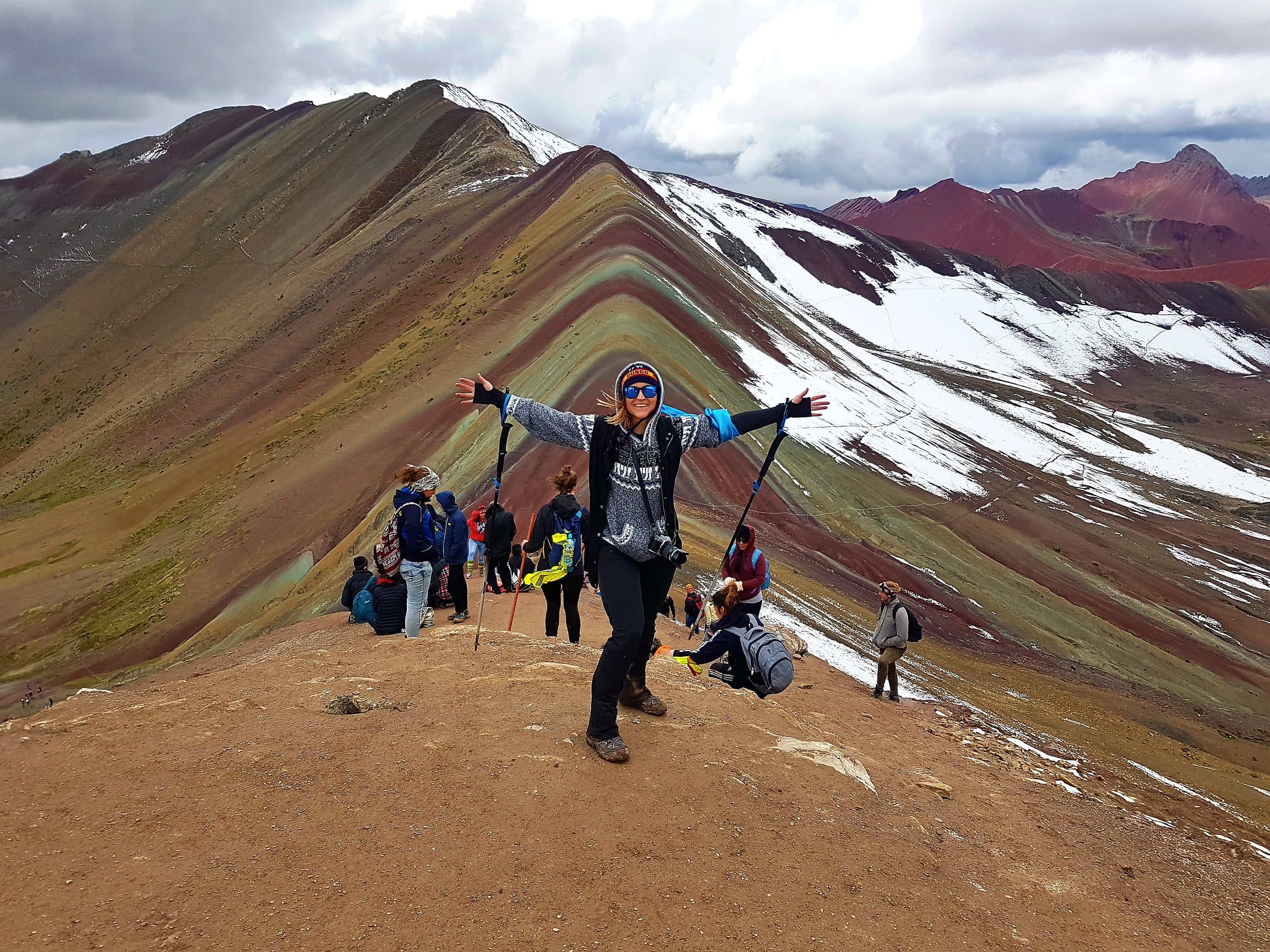
The striped ridge south of Cusco tops out around 5,000 metres, higher than anywhere else on this journey by a long way. It is a long day: an early drive, then roughly an hour and a half on foot to the viewpoint, slow because of the air rather than the gradient.
We put it at the end of the trip, from Cusco, when you have had ten days at height. Done on day three it is miserable. Done on day eleven it is a hard morning and a very good one. Horses are available for the climb, and we plan a quieter alternative for anyone who would rather skip it.
Our strength
Altitude, done in the right order
Nobody can promise you will not feel the altitude. What we can do is climb in steps, sleep lower than you sightsee, and save the highest day for last. This is the sequence we use.
- 2,335 m
Arequipa
Two nights. A real city to settle into, with a first step up from the coast.
- 3,600 m
Colca Valley
Two nights. Cross the high pass by day, sleep in the valley below it.
- 3,810 m
Lake Titicaca
Two nights. The highest you sleep, reached after four days of adjusting.
- 2,870 m
Sacred Valley and Machu Picchu
Three nights, lower and easier, with the citadel at 2,430 m.
- 3,400 m
Cusco, then Vinicunca
Three nights. The city once you are ready for it, the 5,000 m ridge last.
Heights are approximate. If you have a heart or lung condition, talk to your doctor before you book; we will happily send the route for them to look at.
When to go
The dry season runs May to September
The Andes have two seasons rather than four. June to August is clearest and busiest. April, May, September and October are our favourite balance of weather and space.
A sample route
The High Road to Machu Picchu, 13 nights
A starting point, not a product. We change the dates, the hotels and the pace to suit the people actually travelling, and it stretches to 14 nights with a Lima food day or a night at the end.
Indicative price
From CA$10,500
Indicative, per person, confirmed at quote
- Based on two travelling together, private guiding and transfers
- Includes the train to Machu Picchu, entry and guiding at the citadel
- International flights quoted separately
- Virtuoso benefits at the hotels where they apply
A custom multi-stop journey like this one carries a CA$400 design fee, credited to the trip when you book.
Questions we are asked
Before you plan Peru
Will I get altitude sickness?
Most people feel the altitude in some way: a headache, short breath on stairs, a poor first night. A few feel it badly, and fitness does not predict who. What helps is a slow climb, sleeping lower than your highest day, water, and no big plans on arrival. That is how our routes are built.
Ask your doctor about medication before you go, and tell us about any heart or lung condition so we can plan around it.
Should we walk the Inca Trail or take the train?
The classic Inca Trail is four days, camping, with permits capped each day and released months ahead. It is closed every February. If you want it, it has to be the first thing we book.
The train from Ollantaytambo or Cusco is the other way in, and with a night at the Sanctuary Lodge you still see the citadel at its quietest. Shorter walks, including a one-day section of the trail, sit between the two.
How fit do we need to be?
For the route above, comfortable walking for a few hours on uneven ground and plenty of stairs. Machu Picchu is steps everywhere. Vinicunca is the one hard day, and it is optional. The Inca Trail asks for more: steady fitness and some recent hiking.
Can we combine Peru with the Galapagos or Ecuador?
Yes, and it works well. Flights connect Lima with Quito and Guayaquil, and from there to the islands. The Galapagos sit at sea level, so they are a good way to finish after a fortnight at height. We travelled Peru and Ecuador together in 2015 and still plan the pairing often.
Allow at least a week for the islands, more on a small ship.
Is Machu Picchu very crowded?
At midday in July, yes. Timed tickets spread people out, and sleeping at the gate is the simplest way to see it with fewer around you. Shoulder months help too.
Keep reading
Where we stayed, the seasons, and the next guide
All active and cultural journeys →Field reports in the journal →
Plan a trip
Tell us when you can travel, and how you feel about stairs at altitude
A short first note is enough. We reply within one business day, and nothing is booked until you have a written quote in front of you.