Field report · Vientiane, Vang Vieng and Luang Prabang, Laos
Between karst and the Mekong
Nine days on Laos's central route, from a Mekong night market to a dawn line of monks in Luang Prabang.
Laos
Nine days on Laos's best known route took us from a riverside night market in Vientiane to the limestone valleys around Vang Vieng, and on to a dawn procession of monks in Luang Prabang that has continued largely unchanged for centuries.
We flew into Laos by way of Hong Kong and Bangkok, landing in Vientiane on a warm evening in the middle of December.
What followed was a shorter, simpler trip than the one we'd first sketched out: nine days up the country's central spine, Vientiane, then Vang Vieng, then Luang Prabang. A high-speed rail line, the Laos-China Railway, links Vang Vieng and Luang Prabang. We caught it out of Vang Vieng on a clear morning, red and white against the platform, watching the karst give way to hill country through the window.
“The karst turned from grey to silhouette as the sun went down, the river catching the last of the colour.”
From the journalVientiane after dark
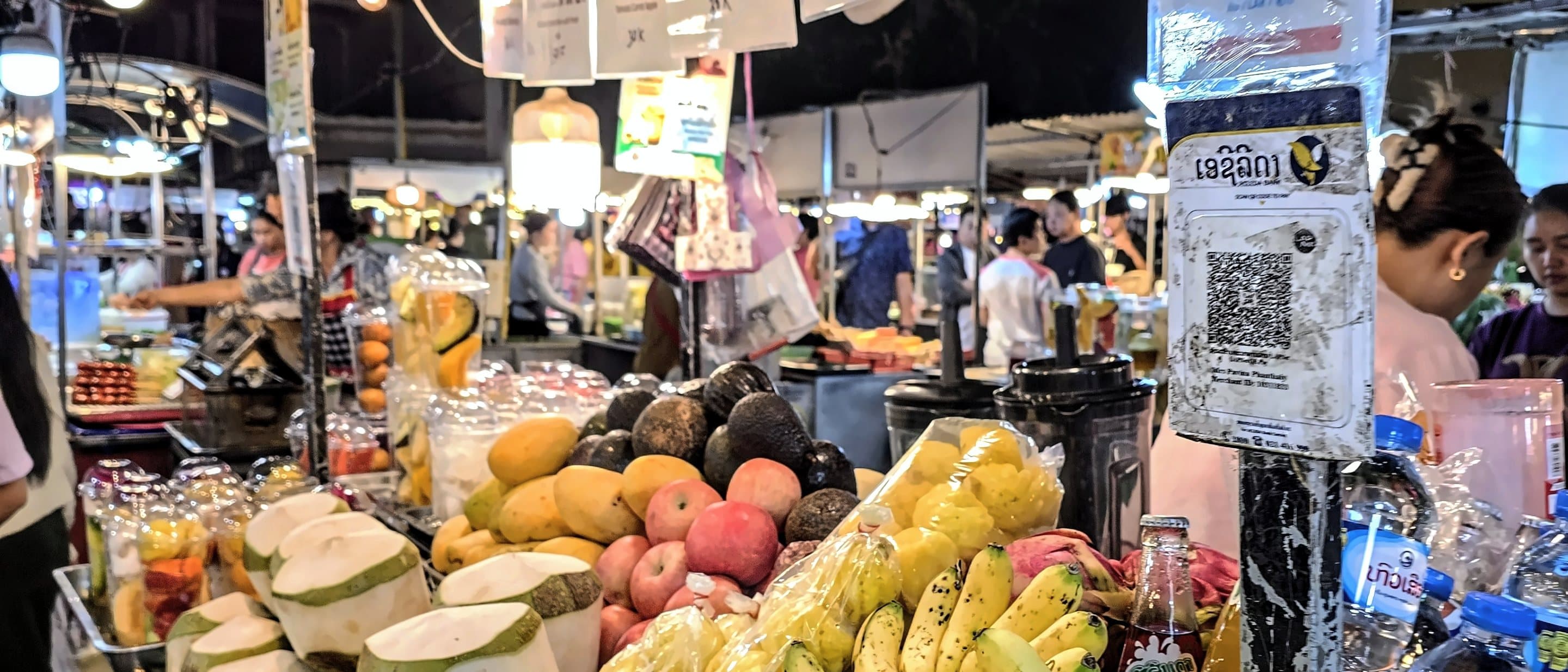
Our first real evening in the country was spent at a night market strung along the Mekong in Vientiane. Vendors had stacked coconuts, bananas, watermelon and dragon fruit into pyramids under strings of light, and a stall nearby did a steady trade in milk tea, iced and sweet, poured for anyone who stopped to look.
It was an easy, unhurried introduction to Laos, no grand sights, just fruit carts and river air and the sound of a city settling into evening.
Karst country
Vang Vieng sits in a ring of limestone karst that rises straight out of the flat river valley, grey green and improbably steep. By day the peaks framed everything, including an afternoon by a pool with the karst wall standing behind it like scenery. At one point we watched a pair of paragliders trace slow circles over the valley, small and unhurried against all that rock.
In the evenings we found a table on a terrace above the river and watched the karst turn from grey to silhouette as the sun went down, drinks sweating in the heat, lime and ice, the water below catching the last of the colour.
The old capital
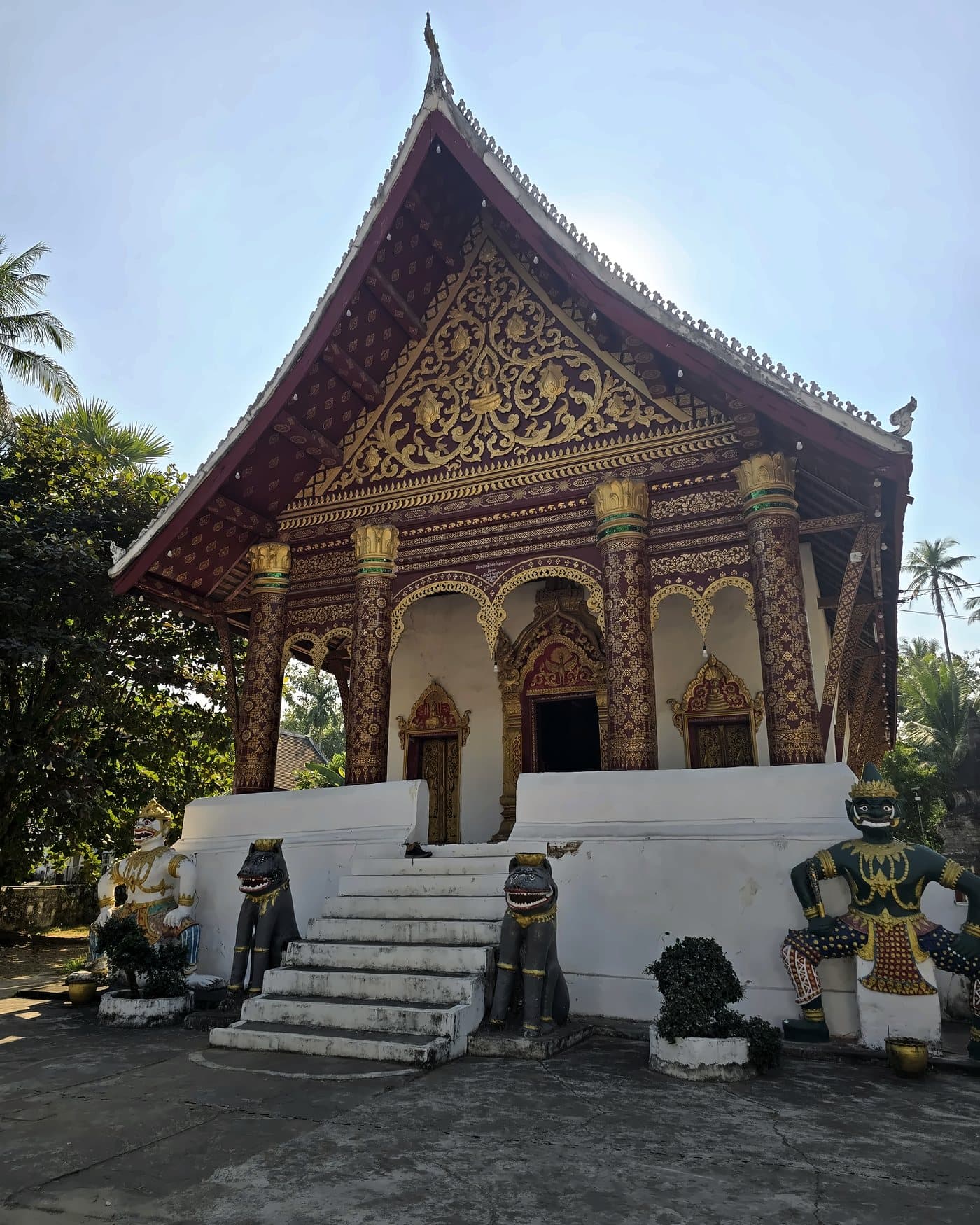
Luang Prabang announces itself in gold. Our first afternoon there was spent below a temple roof trimmed in gilding, with guardian statues watching over the entrance stairs.
Later we walked the riverbank, where wooden long-tail boats sat moored along the Mekong and forested hills rose on the far shore.
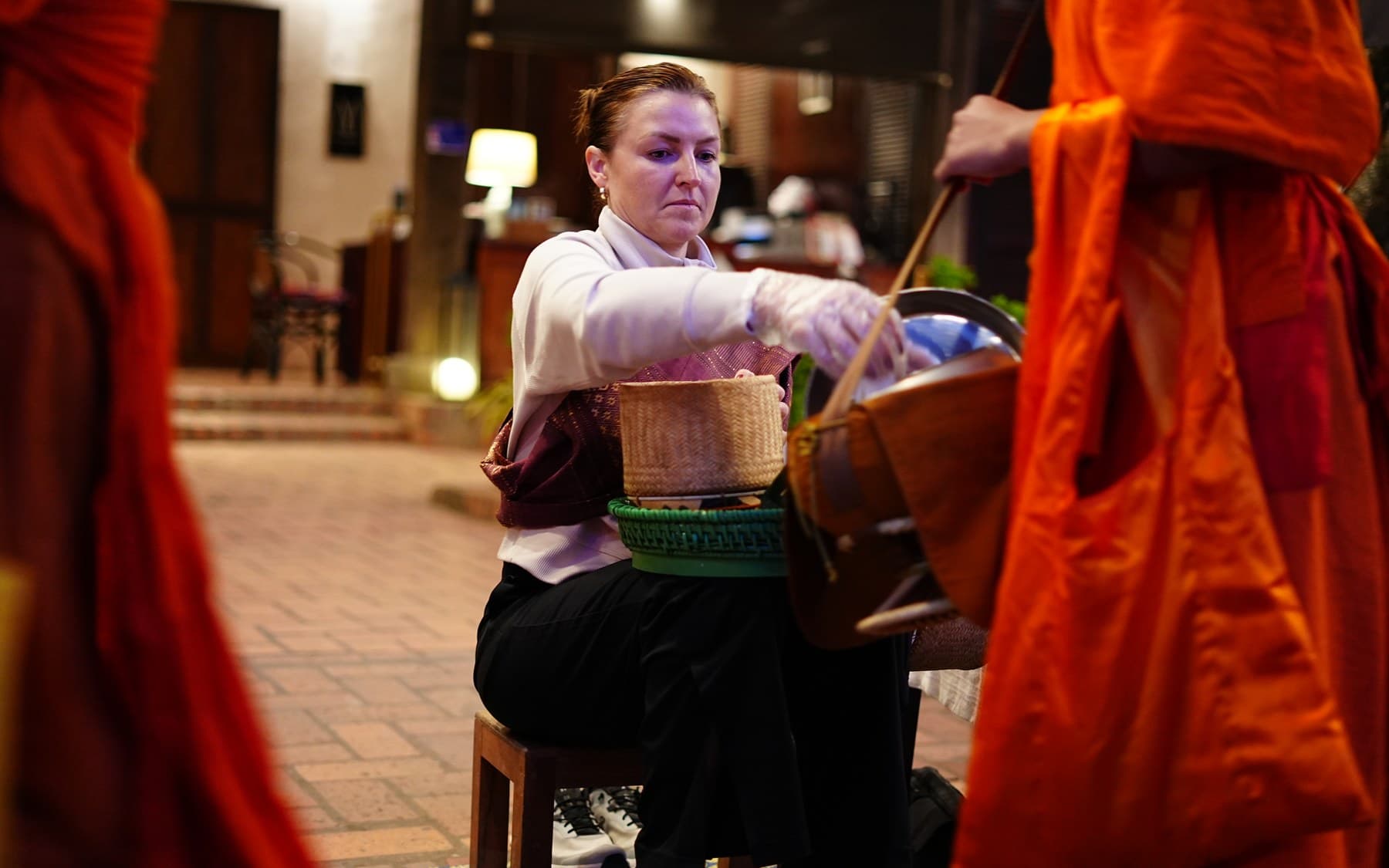
“Monks in saffron robes walked past in a long, quiet line, the whole street hushed except for bare feet on stone.”
From the journalAlms at first light
Our last morning in Laos began before six, kneeling on a low stool along a street in Luang Prabang's old quarter to take part in Tak Bat, the daily alms-giving that has continued in the town for centuries. Monks in saffron robes walked past in a long, quiet line, and we offered sticky rice from a woven basket as each one passed, the whole street hushed except for bare feet on stone.
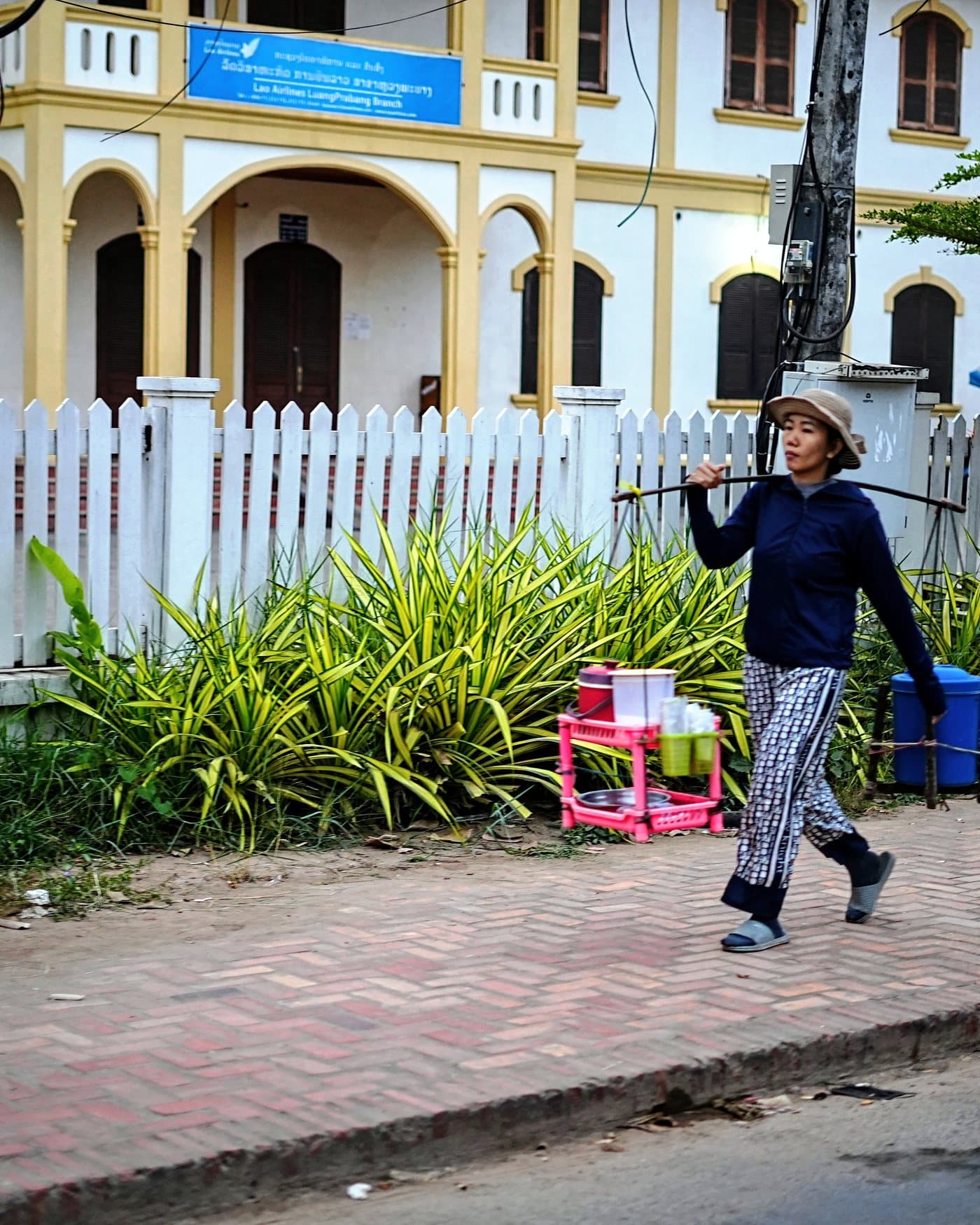
Vendors nearby sold tip khao, the traditional woven rice baskets, stacked in tidy pyramids for anyone who arrived without one. As the light came up, a woman passed with a shoulder yoke of baskets, walking by the Lao Airlines office on her way to market, the ordinary business of the town resuming around a ritual that never really stops for it.
Laos. Our own photographs from the trip.
We left Laos the way we found it, quietly, without much fuss. Nine days is not long enough to see a country, and there is plainly more of it we didn't reach. But between the fruit stalls of Vientiane, the karst of Vang Vieng and a basket of sticky rice offered at dawn, it was enough to understand why so many visitors plan to come back.
From the journal · The Travelling T · Went December 2024