Field report · Malaysia
Kuala Lumpur to the Kinabatangan
Glass towers and hawker stalls on the peninsula, then a week on a Sabah river thick with wildlife, two very different sides of the same Malaysia trip.
Malaysia
Malaysia gave us two trips for the price of one: a run of towers, hawker stalls and murals on the peninsula, and a slower week on a tannin-dark river in Sabah, a short flight and a world away.
Our records don't line up the two legs of this trip on a single timeline. What survives from the peninsula is a set of pages from a photo book covering Kuala Lumpur, Penang and a resort on the water. What survives from Sabah is a folder of camera files with a clean date stamp, starting March 8, 2025. So we're presenting Malaysia here the way it actually reached us: two distinct threads of one long Southeast Asia trip, rather than a single tidy itinerary in order.
The first thread runs through the peninsula, a handful of stops in a handful of days: a city built around a pair of glass towers, an old trading port thick with trishaws and street art, and a resort marked, as far as we can tell, by a large eagle statue. The second thread is Sabah, where the record is precise almost to the hour: a week on the Kinabatangan River out of a lodge called Sukau, followed by nearly a week in the water off an island best known for the reef it guards, Sipidan.
“From the 86th floor, Kuala Lumpur stopped being individual smells and noise and turned into a map of itself, glass towers giving way to green hills at the edges.”
From the journalTowers, trishaws and a hawker tour
We stayed near the city centre in Kuala Lumpur, close enough to walk toward Central Market, and based ourselves at the JW Marriott Kuala Lumpur, using its executive lounge between outings. One evening was a hawker and street food tour: rendang made Minang-style, pani puri, and kopi C, the local coffee cut with evaporated milk. By day we went up the Petronas Towers, crossing the skybridge before riding to the 86th-floor observation deck, and walked KLCC park at ground level, where a metallic whale sculpture marks one corner of the green space beneath the towers.
A flight took us to Penang, where we stayed at the Marriott Penang, arriving by Uber to a welcome snack tray at check-in. George Town itself is a walk through layers: a colonial-era cemetery sitting right up against the UNESCO World Heritage core zone, trishaws for hire along the old streets, and the murals the city is known for, including one of a child on a real parked motorbike and another of a child reaching up for noodles held out by a grandmother figure. We also stopped at Fort Cornwallis, which didn't hold our attention long. More time went to the Penang Tropical Fruit Farm, a small-group tour where a guide walked us through more than two hundred varieties, including soursop, jambu air and jungle durian, plus a citrus fruit neither of us had tried before. Stingless bees were working a hive on the same property, producing honey without the sting most of us associate with the word.
A resort marked by an eagle
The photo book's last stop on the peninsula is a resort it never names outright, though a landmark described in the text, a large eagle statue, lines up closely with Langkawi's well-known Eagle Square. We can't confirm that from the text alone, so we're stating it as a strong likelihood rather than a fact. Whatever the island, the days there were unhurried by comparison: jet skiing at speed on open water, and long stretches by the pool, where the other guests' sun-protection gear, full coverage from head to ankle, got its own mention in the notes. It reads like the kind of stop built for recovery between two more active legs of a longer trip.
Into the Kinabatangan
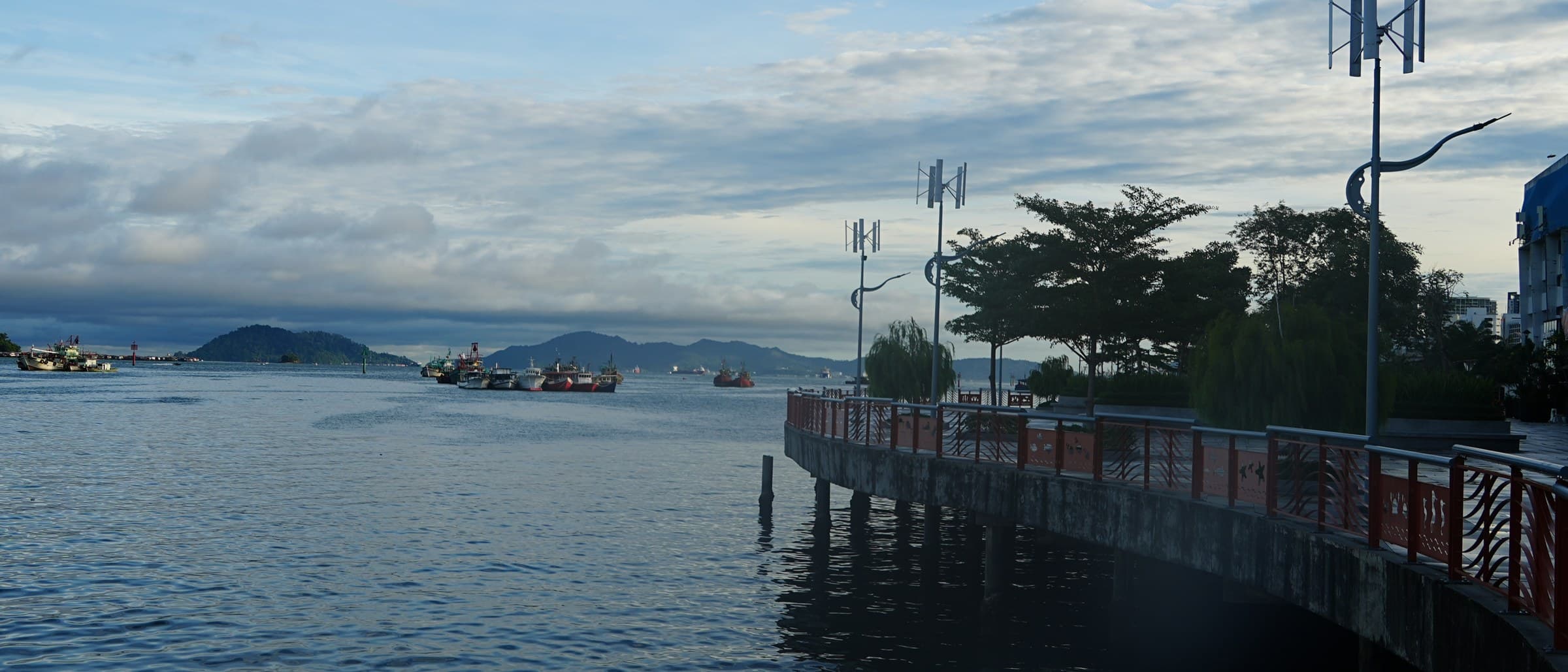
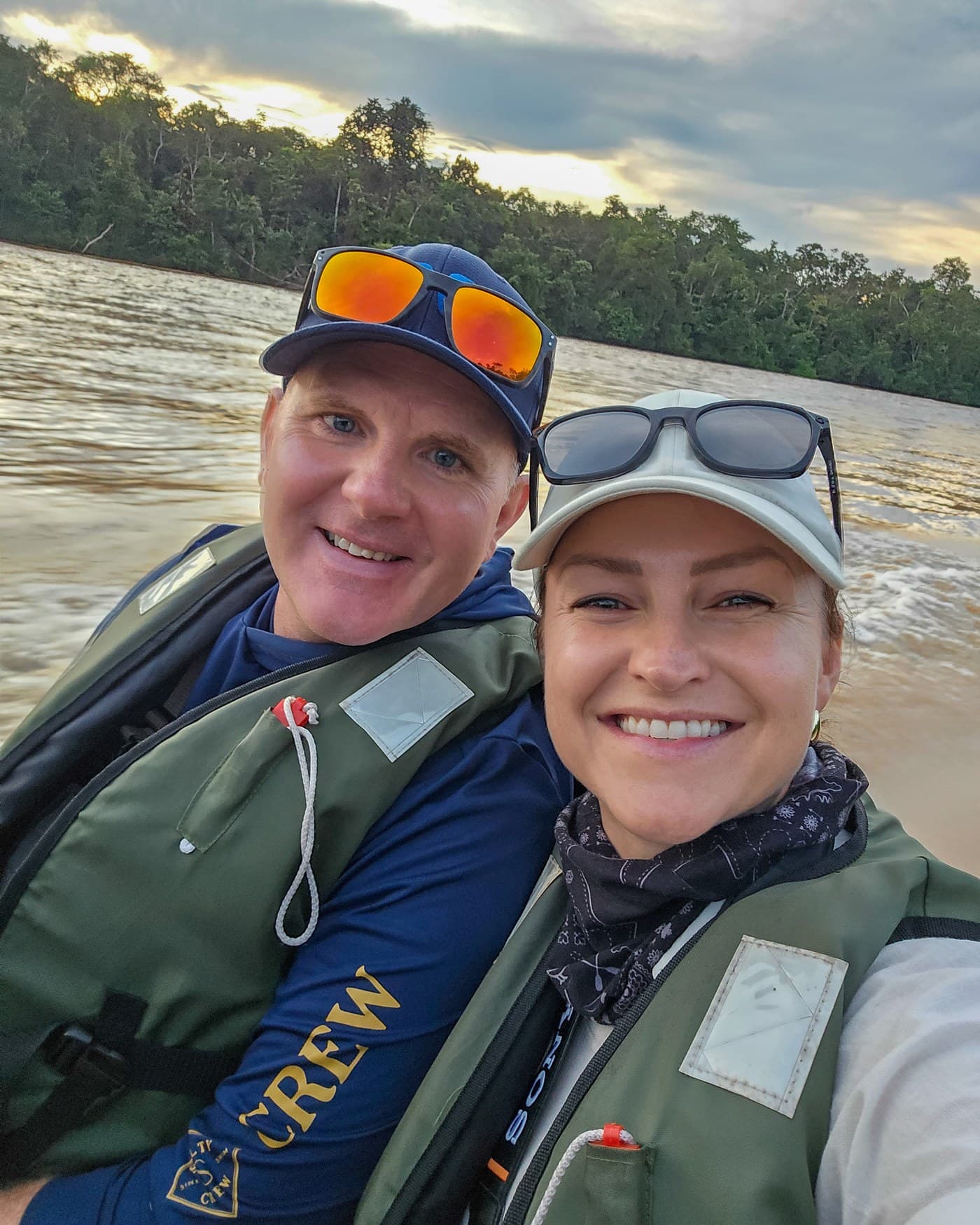
The Sabah leg opens on March 8, 2025, with Kota Kinabalu's waterfront at dawn: fishing boats moored in the shallows, the city's promenade quiet in the foreground, hills across the bay softened by haze. From there the trip moved inland and upriver for a week, based at Sukau Rainforest Lodge on the Kinabatangan, its entrance sign lit up over the Kari Boardwalk at night. This stretch of river is the heart of the trip's wildlife leg, and the photos back that up: small motorised safari boats, a guide and a handful of us in life jackets, heading out onto a muddy, tannin-stained river in weather that ranged from clear to rainy, the boats going out morning and evening to work the light and the animals' own routines. We carried a copy of the Wildlife Atlas of Sabah with us, a printed field guide covering the region's headline species, orangutan, proboscis monkey, Bornean gibbon and sun bear among them, and it earned its keep. One night walk, on March 14, turned up a small gold-orange gecko lit up on a leaf, a reminder that the river's wildlife doesn't stop when the light does.
“Every torch beam on that boardwalk turned up something we hadn't expected, right down to a gecko lit gold on a leaf, a whole life going on after dark.”
From the journalBeyond the river
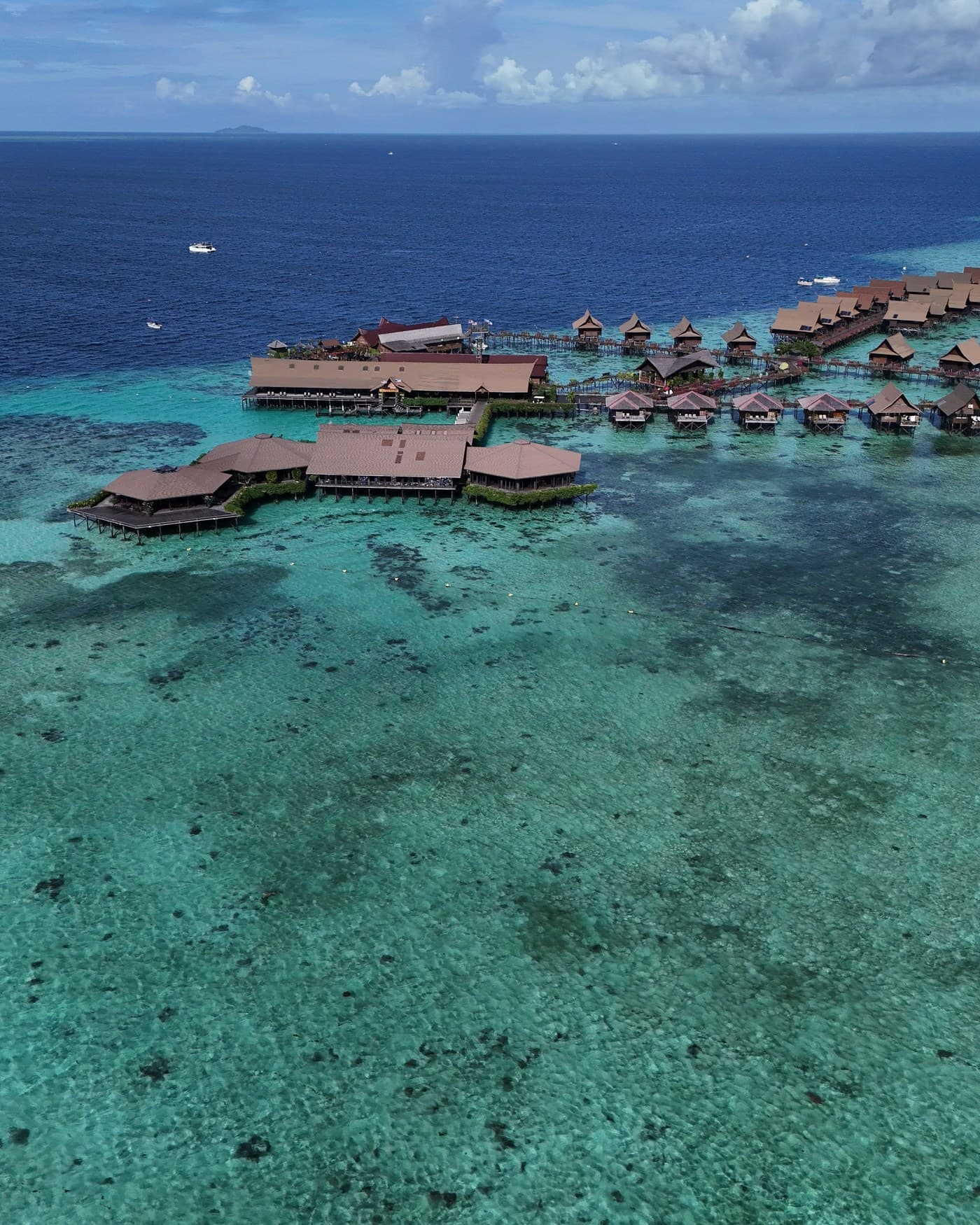
By March 16 the trip had shifted from river to reef. Sipidan itself is a marine park with no accommodation allowed on the island, so diving trips there run from a base nearby, and the resort in our photos, overwater wooden bungalows strung along a jetty and reef edge, most likely sits on neighbouring Mabul Island, the standard jumping-off point for Sipidan dives. We can't confirm the resort's name from anything we have on file, so we're leaving it unnamed rather than guessing. What the photos do confirm is the setting: a drone shot from above shows the water shifting from turquoise over the shallows to deep blue where the reef drops away, and it's as good a closing image as this leg offers.
Malaysia. Our own photographs from the trip.
Two legs, two very different paces, and by the end of it we'd gone from an 86th-floor view of Kuala Lumpur to a torch beam picking out a gecko on a leaf above the Kinabatangan. Malaysia held both without any trouble.
From the journal · The Travelling T · Went Sabah leg dated to March 2025; the Peninsular Malaysia leg is undated in our records